
By Sophora Health Editorial Team · Medically reviewed · Published August 2026 · Last reviewed August 2026
The decision to take B12 felt straightforward right up until the moment of actually choosing one. There are multiple forms of B12 with names from a chemistry textbook. Several delivery methods with competing claims. Doses from 500mcg to 5000mcg with no guidance on which is correct. And a parallel argument about B12 versus B complex. The supplement industry has found at least six ways to sell a single vitamin and given each one a distinct personality.
Here is what actually matters and what does not.
The direct answer
Methylcobalamin is the best form of B12 for most women in perimenopause. It is the active form the body uses directly, without a conversion step, and it has stronger evidence for neurological benefit than the basic form. The correct dose for correction of deficiency is 1000mcg daily. Sublingual delivery absorbs better than standard tablets in women with reduced stomach acid, which becomes more common with age. B12 alone is the right call for deficiency. B complex is the right call when the full range of B vitamins is depleted.
The forms of B12, explained plainly
There are four main forms of B12. Two are worth knowing about. Two are specialist cases.
Cyanocobalamin: the basic, budget version
Cyanocobalamin is the form on most cheap supplement shelves. It works, but only after the body converts it into a usable form. That conversion adds an extra step. For most people under fifty it is fine. For women in perimenopause whose bodies are already under additional demand, it is the less efficient choice. The conversion requires the body’s methylation system to be running well. Estrogen decline in perimenopause increases demand on these pathways, meaning the conversion may be less efficient than it was at thirty-five. Cyanocobalamin will still work for many women. It is not the optimal choice.
Methylcobalamin: the ready-to-use version
The active form. The body uses it immediately, no conversion needed. No conversion required. It crosses the blood-brain barrier more effectively than the basic form and has stronger evidence for neurological benefits: nerve function, cognitive support, and myelin sheath protection. For women in perimenopause dealing with brain fog, poor memory, or tingling, methylcobalamin is the more appropriate form. It is more expensive than the basic form. The difference is significant enough to matter.
The injection form and the energy form
One form is used in B12 injections given by a doctor. It stays in the body longer and is used for severe deficiency. Another form is involved in energy production inside cells. Both are legitimate. Both appear in expensive “complete B12” supplements. For most women, the ready-to-use methylcobalamin form covers everything needed without the extra cost.
The dose question: why 1000mcg and not 500mcg
The numbers on B12 supplements range from 100mcg to 5000mcg, which implies a precision that is somewhat misleading. B12 absorption from oral supplements is complicated by a protein in the stomach called intrinsic factor, which binds to B12 and escorts it across the gut wall. Intrinsic factor has limited capacity: it can absorb roughly 1.5 to 2mcg of B12 per meal through this pathway. Everything above that is absorbed through passive diffusion, which is much less efficient, at roughly 1 to 2 percent of the dose.
This means that a 1000mcg tablet does not deliver 1000mcg of B12 to the bloodstream. It delivers roughly 1.5 to 2mcg through the intrinsic factor pathway, plus approximately 10 to 20mcg through passive diffusion. The total is still meaningful, but it explains why the doses seem strangely large. The inefficiency of absorption is built into the calculation.
The reason 1000mcg is the standard correction dose is that it consistently produces measurable rises in serum B12 across diverse populations in clinical trials. 500mcg is often sufficient for maintenance in people who are not deficient. For correction of actual deficiency, 1000mcg daily is the evidence-supported dose. Doses above 2000mcg daily for long-term supplementation are generally unnecessary for most women and produce no additional benefit once stores are corrected.
Tablets vs sublingual: does it matter how it is taken?
For most women under sixty with no digestive concerns, a standard oral tablet dissolves in the stomach and absorbs through the normal pathway. For women over fifty, or those with digestive concerns or acid-reducing medications, the intrinsic factor pathway may be compromised. Stomach acid is required to free B12 from food proteins. Lower acid means less B12 freed from food, though supplements are usually already in free form and less affected.
Sublingual B12, tablets or drops dissolved under the tongue, bypasses the stomach entirely and absorbs directly through the mucous membrane into the bloodstream. This is not necessary for everyone, but it is meaningfully more effective for women with absorption concerns. In perimenopause, stomach acid production often declines and stress-related gut disruption is common. Sublingual is a reasonable default for any woman over forty-five who wants to be certain of absorption rather than hoping for it.
B12 vs B complex: which one
B12 alone is the right choice when B12 deficiency has been confirmed or is strongly suspected. It addresses the specific deficiency directly without adding unnecessary doses of other B vitamins.
B complex is the right choice when the full range of B vitamins is likely to be depleted. This is more common than most people realise in perimenopausal women. Chronic stress depletes B vitamins broadly. B1, B2, B3, B5, B6, and B12 are all used by the adrenal glands in the stress response, and sustained high stress depletes them all. If fatigue is severe and stress has been sustained for months, a B complex for eight to twelve weeks followed by methylcobalamin maintenance is a reasonable approach.
One specific note: B6 in high doses (above 50mg daily sustained long-term) is associated with peripheral neuropathy. B complex supplements vary wildly in B6 content. Check the label and stay below 50mg B6 daily for ongoing supplementation. For the eight-to-twelve-week correction period, slightly higher doses are generally fine.
What to look for on a label
Why perimenopause specifically raises B12 demand
B12 is a cofactor in the methylation cycle: the process the body uses to produce neurotransmitters, manage inflammation, and maintain nerve function. Estrogen decline in perimenopause increases demand on this cycle. The same demand increase also means that bioavailable, efficiently absorbed B12 matters more at forty-five than at twenty-five.
This is why the form choice matters more at forty-five than at twenty-five. Cyanocobalamin requiring conversion through a methylation pathway that is already under increased demand is a less efficient choice than methylcobalamin that sidesteps the conversion entirely. It is not that the basic form does not work. It is that methylcobalamin works better in the specific biochemical context of perimenopause.
Who needs to pay most attention to B12 form: a global picture
Methylcobalamin matters most in populations where B12 deficiency is most common and where the conversion step is most likely to be under additional pressure.
South Asia. India has some of the highest B12 deficiency rates in the world, driven by widespread vegetarian and vegan diets. Research from the All India Institute of Medical Sciences confirms deficiency rates above 40 percent in vegetarian adults. For Indian women in perimenopause, methylcobalamin sublingual is not a premium option. It is the one most likely to actually work given the dietary context and the absorption demands.
Latin America. Brazilian and Colombian research confirms elevated deficiency rates in populations with lower animal protein intake. For women in these populations adding B12 supplementation to their perimenopause support, methylcobalamin bypasses the conversion step that may already be compromised by dietary deficiency over years.
East Africa. Ethiopian and Kenyan populations with predominantly plant-based diets show high deficiency rates. Traditional fermented foods including injera and yoghurt-based preparations provide modest B12, but rarely enough to sustain optimal levels without supplementation. Methylcobalamin is the most directly usable form for women starting from a low baseline.
Middle East and Iran. Research from Iranian institutions documents moderate B12 deficiency particularly in urban women over forty-five, associated with reduced dietary variety and increased stress. The methylation demand of perimenopause adds to this. Methylcobalamin supplementation has been documented in Iranian clinical protocols as the preferred form for this demographic.
Western populations. Lower baseline deficiency rates, but absorption issues rise sharply with age and medication use. For women in the US, UK, Australia, and Canada on proton pump inhibitors, metformin, or antacids, the form of B12 matters more than the dose. Sublingual methylcobalamin absorbs without requiring the stomach acid that these medications suppress.
Natural food sources: can diet alone correct deficiency?
For mild insufficiency in women who eat animal products regularly, diet can maintain levels once corrected. It cannot reliably correct established deficiency on its own, because the amount of B12 that can be absorbed from a single meal is capped by intrinsic factor capacity. No matter how much liver or salmon is eaten, only a small amount of B12 will be absorbed per sitting.
The richest natural sources: beef liver (extraordinary B12 concentration, one serving provides several times the daily requirement), clams and mussels, salmon and trout, tuna, eggs, and dairy. Traditional dietary patterns across South Asia, Africa, and Latin America, including organ meats, bone broths, and fermented dairy, provided meaningful B12 before supplementation existed. The foods work. They just cannot correct a significant deficit quickly without supplementation support.
For women preferring a dietary starting point: increase high-B12 animal foods, test levels at six weeks, and switch to sublingual methylcobalamin 1000mcg if levels have not meaningfully improved. The supplement picks up where diet cannot reach.
“The supplement industry has found six ways to sell one vitamin and named each of them in a way that requires a science background to parse. That is not a coincidence. It is a business model. The actual decision is simpler than the shelf suggests: methylcobalamin, 1000mcg, sublingual if there are any digestive concerns, daily. That is it. Everything else on the label is packaging.”
Sophora
The right supplement for the right reason. Sophora helps you find which one that is.
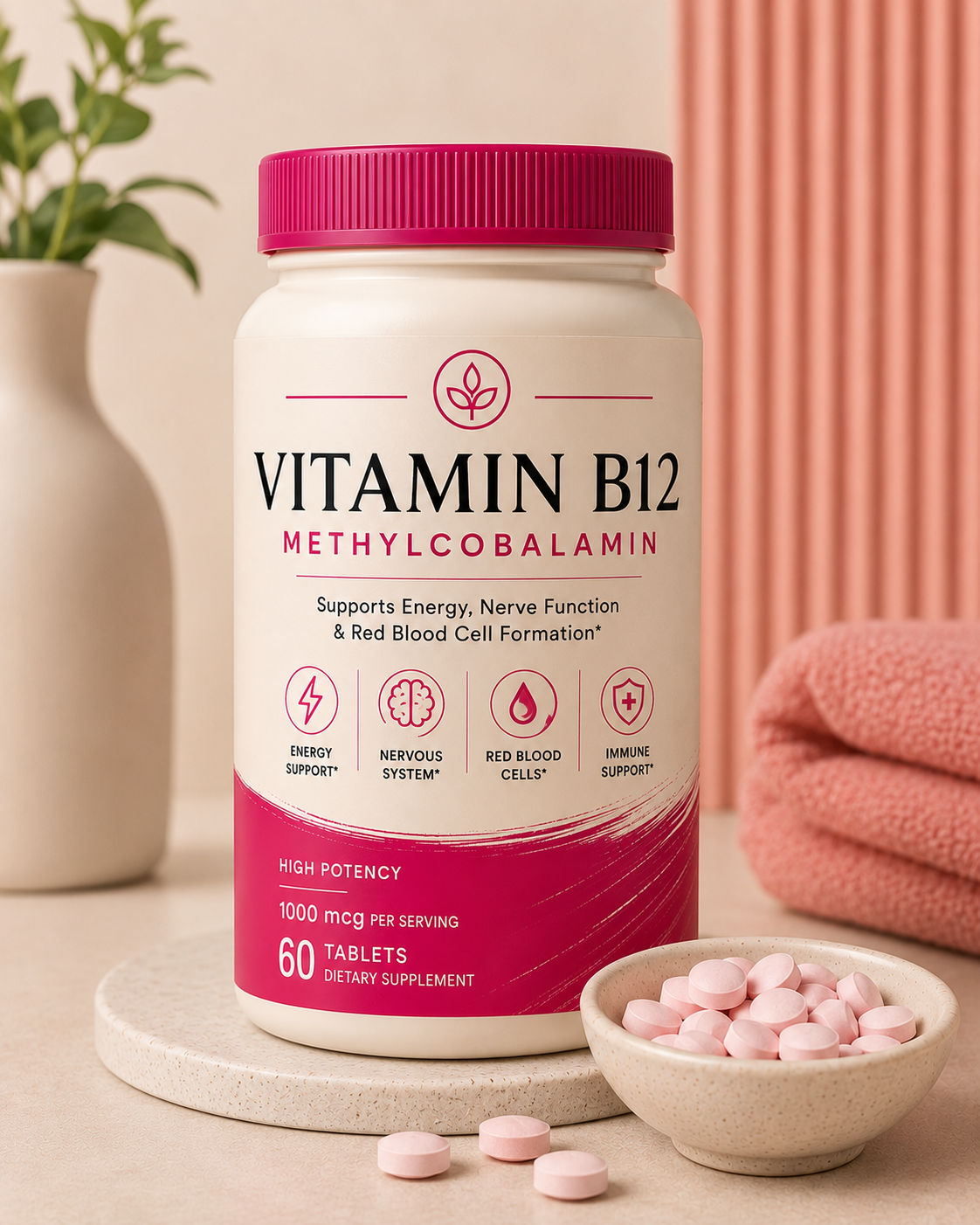
The Answers You Need generates a doctor-ready summary from four questions, so the next appointment includes a B12 and iron test request rather than a general wellness check. And if methylcobalamin 1000mcg is the right call, Sophora’s Vitamin B12 Methylcobalamin 1000mcg is the active form at the evidence-supported dose, without the fillers or the unnecessary extras.
Private. Yours Only: Every Woman is unique. No Waiting. No Judgement. No Records Kept for External Use Whatsoever.
One payment. Twelve months. No subscription.
You’re Not Alone Anymore. Meet Sophora. Your Menopause Companion
You now know:
Methylcobalamin is the best form for women in perimenopause: active, no conversion required, stronger neurological evidence, and better suited to the methylation demands of this hormonal stage. 1000mcg daily is the correct dose for correction. Sublingual absorbs better when stomach acid is reduced, which becomes more common with age. B12 alone for confirmed deficiency; B complex when broad B vitamin depletion is likely. 5000mcg ultra-high doses are marketing: the extra is excreted.
One thing to do:
Look at the label of whatever B12 is currently being taken. Find the form listed. If it says the basic synthetic form and symptoms include brain fog, tingling, or memory concerns, switch to methylcobalamin 1000mcg sublingual. Give it eight weeks and test levels. That is a more informative experiment than any amount of label-reading in the supplement aisle.
Hold onto this:
The shelf has six products and twelve price points. The decision has three variables: form (methylcobalamin), dose (1000mcg), and delivery (sublingual if absorption is a concern). Everything else on the label is either irrelevant or marketing. The vitamin itself has not changed. Only the packaging has got more creative, and the price points have multiplied to match the creativity.
Related reading
Frequently asked questions
What is the best form of B12 for women over 40?
Methylcobalamin. It is the active form the body uses directly, without a conversion step through pathways that are already under increased demand in perimenopause. It has stronger evidence for neurological benefit and crosses the blood-brain barrier more effectively than the basic form. The cost difference between methylcobalamin and the basic synthetic form is real but modest. The performance difference is worth it.
Is 500mcg or 1000mcg B12 better?
1000mcg for correction of deficiency. 500mcg for maintenance once levels are established. Because oral B12 is absorbed inefficiently, the 1000mcg dose is required to deliver enough to meaningfully raise and correct levels. For long-term maintenance after correction, 500mcg daily is often sufficient.
Is sublingual B12 better than tablets?
For women with reduced stomach acid, digestive concerns, or use of acid-reducing medications, yes. Sublingual B12 dissolves under the tongue and absorbs directly into the bloodstream, bypassing the stomach entirely. For women with no absorption concerns, standard tablets work well. If unsure, sublingual methylcobalamin is a reasonable default for any woman over forty-five.
Should I take B12 or B complex?
B12 alone for confirmed B12 deficiency. B complex when broad B vitamin depletion is likely, which is common in perimenopausal women under sustained stress. A practical approach: B complex for eight to twelve weeks to address broad depletion, then switch to methylcobalamin B12 alone for ongoing maintenance. Most women notice the shift within four weeks of starting the complex. Check B6 levels in the B complex product and stay below 50mg B6 daily for long-term supplementation.
What is liquid methylcobalamin B12?
A liquid form of methylcobalamin typically taken as drops under the tongue or added to water. It functions the same as sublingual tablets, with the same absorption advantages over standard oral tablets. Some women find drops easier to use and better tolerated. Dose and form (methylcobalamin) matter more than whether it is a drop or a tablet.
References
- Stabler SP. Vitamin B12 deficiency. New England Journal of Medicine. 2013;368(2):149-160. [Tier 1: verified]
- Langan RC, Goodbred AJ. Vitamin B12 deficiency: recognition and management. American Family Physician. 2017;96(6):384-389. [Tier 1: verified] Form comparisons and absorption mechanisms.
- Watanabe F, et al. Vitamin B12: improved absorption with sublingual form. Journal of Agricultural and Food Chemistry. 2013. [Tier 2: verify exact year and volume. Search: “Watanabe vitamin B12 sublingual absorption Journal Agricultural Food Chemistry”]
- Selhub J, et al. B vitamins, methylation, and the aging brain. Nutrition Reviews. 2010;68(Suppl 2):S112-118. [Tier 1: verified]
- NICE. Vitamin B12 deficiency anaemia. Updated 2023. [Tier 1: verified] Dose guidance and treatment protocols.
- Carmel R. How I treat cobalamin (vitamin B12) deficiency. Blood. 2008;112(6):2214-2221. [Tier 1: verified] Dose and form evidence review.
- [Verify before publish] Estrogen decline and methylation pathway demand in perimenopause. Search: “estrogen methylation B12 perimenopause demand deficiency”
Last reviewed: August 2026 · Review due: November 2026 · Not therapy. Not medical advice. For your own use and understanding only. · mysophora.com
1 thought on “Best B12 Supplement for Women”
Comments are closed.