
SOPHORA · BREAST HEALTH
Why Are My Breasts Getting Bigger in
Perimenopause?
By Sophora Health Editorial Team
Evidence reviewed · Published July 2026 · Last reviewed October 2026
If your breasts have started to feel fuller or seem to change size from one week to the next, you may be wondering what is going on. Perimenopause can bring some unexpected changes, and the hormones may be unpredictable. Your breasts may have joined the committee. Here is how to separate temporary fullness, body change, bra fit and changes that deserve checking.
Your breasts can look or feel bigger during perimenopause. Sometimes the change comes and goes. Sometimes your weight, breast tissue or a medicine is part of the picture.
A new change can also need checking. If you’re trying to understand what may be connected to menopause and what deserves attention, Sophora Companion helps you explore your symptoms and make sense of what your body may be telling you, one question at a time.

The useful answer is not that perimenopause simply makes every woman’s breasts
grow. Breast size can change during this stage of life, but the reason is
different for each woman. More than one factor can be involved.
Which is inconvenient, because your bra drawer would prefer one clean
explanation and a written apology.
Quick answer: Breasts may seem bigger during perimenopause because hormone
changes can go along with tenderness and temporary swelling. Weight change
and changes in breast tissue can also alter breast size and shape. A new
persistent or one-sided change should be checked rather than automatically
blamed on hormones.
Can perimenopause really make your breasts bigger?
Some women notice more fullness or a larger bra size during perimenopause.
But there is no single reason that explains every case.
Perimenopause is the stage before menopause. Ovarian function becomes less
predictable and periods often change. Hormone levels can rise and fall rather
than simply going down.
Those changes can go along with breast tenderness or fullness. Weight change
can also increase breast volume because breasts contain fat as well as
glandular and connective tissue.
Two women can both say, “My breasts got bigger in my forties,” while the reason
is different for each of them.
Why can breasts feel fuller or swollen during perimenopause?
Hormone changes can affect breast symptoms, including tenderness and fullness.
A breast that feels swollen at one point in the cycle is not necessarily
undergoing lasting tissue growth.
During perimenopause, periods can become irregular. Breast symptoms may then
arrive at a time that no longer matches the old cycle.
Notice whether the fullness comes and goes, whether both breasts change in a
similar way, and whether tenderness returns. A simple record can help you see
whether the change is recurring or staying.
How much does weight change matter?
Weight change can alter breast size because breast volume includes body fat.
If body weight increases, breast size may increase too. The amount varies from
person to person.
Weight change around midlife has many possible influences, including ageing,
activity, sleep and muscle mass. It is too simple to blame every change in
weight on menopause.
Your cup size can also change without a large change on the scale. Breast
shape, tissue distribution and band fit all affect how a bra fits. The label
in an old bra is historical information, not a contract.
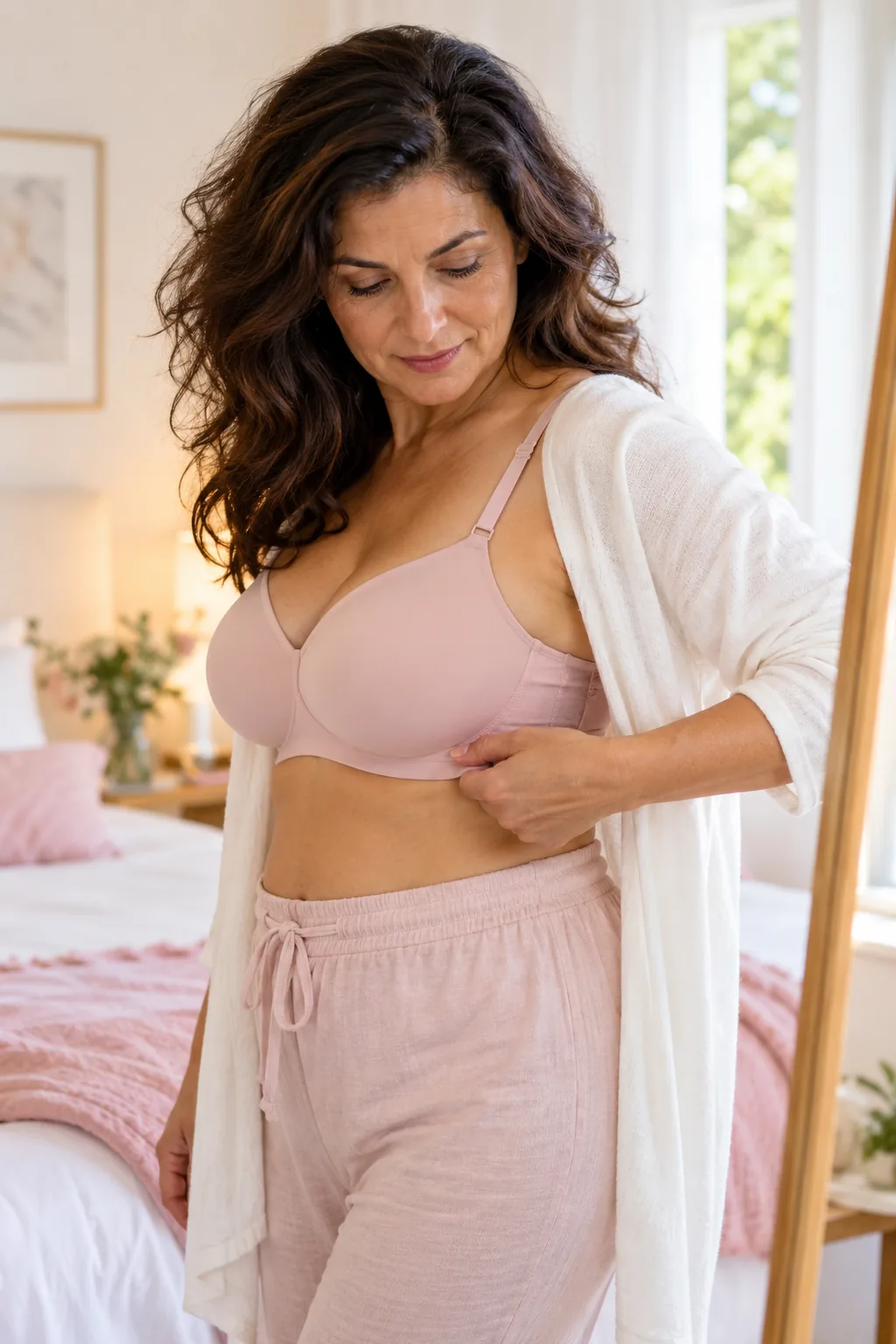
what changed for you.
What is happening inside the breast as you age?
Breast tissue changes with age. Glandular structures can reduce, while the
relative amount of fat can increase. These changes can affect softness,
density, shape and volume.
A 2026 study in Nature Aging mapped age-related changes in normal human breast
tissue. It found major changes in tissue structure and cells around the
menopause years.
This helps explain why breast changes in midlife are real. It does not mean
every visible change has one hormonal cause.
In practical terms, breasts may become softer, fuller, wider, lower, or simply
different from the shape your older bras were designed for.
Could hormone therapy affect breast size or tenderness?
Menopausal hormone therapy can affect breast symptoms in some women, including
tenderness. Responses differ by the treatment, dose and individual.
If the breast-size or tenderness change began after starting or changing
hormone therapy, discuss the timing with the clinician who prescribed it.
Do not stop prescribed treatment based on an internet article.
The same applies to other medicines. If the change began after a medicine was
started or changed, take the medicine list to the appointment.
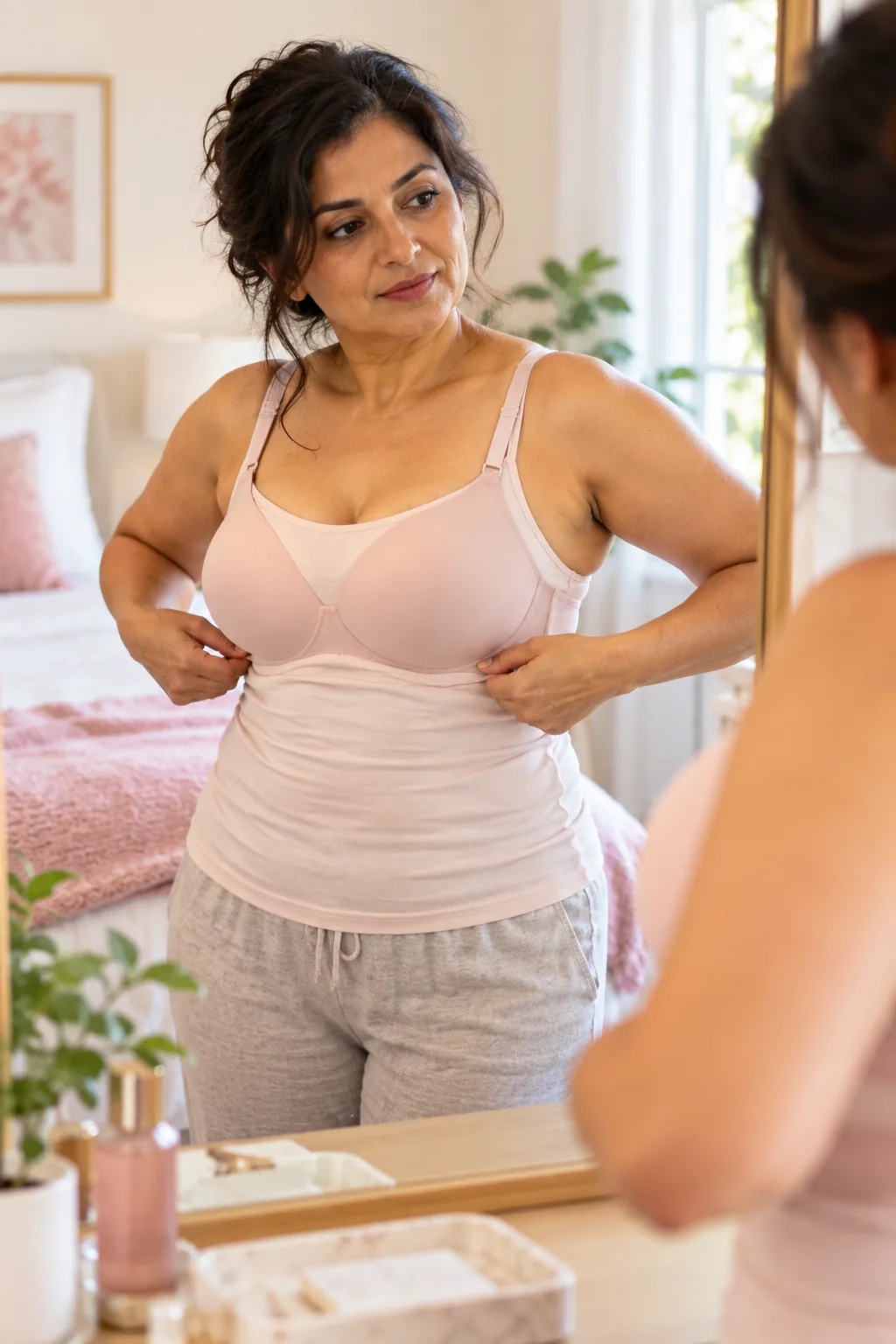
pressure on tender tissue.
Is it breast growth, swelling or a bra-fit problem?
These can feel very similar. A bra may become uncomfortable because breast
volume changed, breast shape changed, the band no longer fits, or tenderness
makes pressure harder to tolerate.
Check the whole fit. Does tissue spill over the cup edge? Does the band ride
up? Are the straps doing too much work? Are the cups cutting in or wrinkling?
A larger cup is not always the answer. A different cup shape, more depth,
better side support or a comfortable wireless style may fit better.
What can you do right now?
Start with the simple things. Remeasure your bra size. Look at shape as well
as size. Choose support that does not press painfully on tender tissue. Track
whether fullness or pain changes over time.
If heat and night sweating are also part of the picture, cooler sleepwear and
breathable bedding may make nights more comfortable. They do not treat
perimenopause, but better sleep matters.
If you are considering magnesium glycinate for another reason, such as sleep,
assess that question separately. Magnesium is not a treatment for enlarged
breasts.
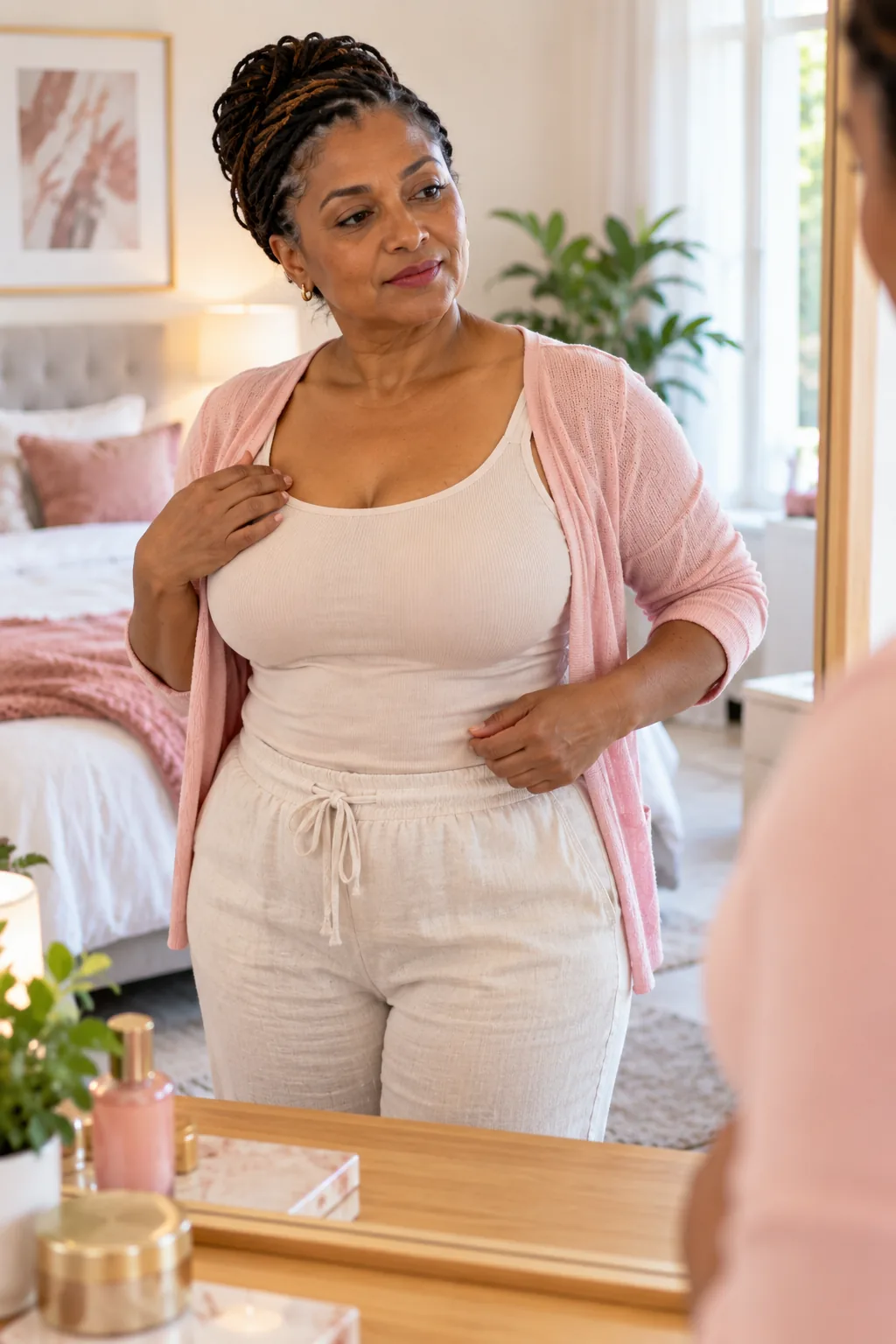
into a diagnosis.
GLOBAL CHECK
Does this experience look the same everywhere?
The biology of breast tissue is not tied to one country. But the way women
experience menopause and access care can differ.
The 2026 MARIE study included women from countries across Africa, Asia, Europe
and South America. That matters because menopause information should not assume
one healthcare system or one screening pathway.
Use the information here to understand the change, then follow the
breast-assessment and screening guidance where you live. A new persistent or
unusual breast change still deserves assessment.
When should a breast-size change be checked?
Arrange medical assessment for a new persistent one-sided enlargement, a new
lump or thickening, skin dimpling, persistent redness, a new nipple inversion,
concerning nipple discharge, or a change that is unusual for you and does not
settle.
Most breast changes are not cancer. But a new unexplained change should be
assessed rather than explained away by age or menopause.
Continue breast screening according to the programme where you live and your
personal risk. Screening schedules differ between countries.
A QUICK WAY TO SORT THE QUESTION
What changed first?
| What you notice | What may be contributing | What to do |
|---|---|---|
| Fullness that comes and goes | Hormone changes or cyclical breast symptoms | Track timing, tenderness and whether both breasts change similarly. |
| Gradual increase in volume | Weight change, tissue composition or several influences | Remeasure your bra and look at shape as well as cup size. |
| Tenderness after a medicine or hormone-treatment change | Medicine or hormone-treatment effects | Note when it began and discuss the timing with your clinician. |
| New persistent one-sided change, lump, skin or nipple change | Needs assessment rather than an assumption about menopause | Arrange medical assessment. |

what changed, and what deserves checking?
A better way to think about the change
You do not need to decide that your breasts are ‘going wrong’ before you
respond to discomfort. First work out what changed: size, shape, tenderness,
movement, skin or asymmetry.
Then deal with the problem in front of you. Better support for movement. A
different cup shape for a shape change. Softer construction for tenderness.
Medical assessment for a new unexplained change.
Perimenopause already has enough mysteries. Your bra does not need to become
one of them.
Questions you may still be asking
Do breasts get bigger before menopause?
Some women notice more fullness or a larger bra size during perimenopause,
but this is not universal. Hormone changes, temporary swelling, weight change
and breast-tissue changes can overlap.
Will my breasts shrink again after menopause?
Some breasts become softer or lose glandular volume after menopause. Body fat
and weight changes can also affect size. There is no single outcome for every
woman.
Why has my cup size increased in my forties?
Possible contributors include weight change, cyclical fullness, changing
breast composition, hormone therapy and a bra size or shape that no longer
fits. Persistent or unusual changes deserve assessment.
Can perimenopause cause sore and bigger breasts?
Perimenopause can coincide with breast tenderness and fullness. Because periods
and hormone changes become less predictable, the symptoms may feel different
from earlier premenstrual breast changes.
Should I buy a larger bra immediately?
If your current bra cuts in or compresses tender tissue, remeasure first.
Check cup shape, depth, band fit and support before choosing a new size.
Remember This
You now know: Breasts can feel or become larger during perimenopause, but
hormone changes, temporary fullness, weight change and tissue changes can
overlap.
One thing to do: Notice whether the change comes and goes, affects both
breasts similarly, and has changed your bra fit. Remeasure rather than
automatically buying the old size again.
Hold onto this: A changing body deserves investigation and comfort, not a
courtroom. Find out what changed, then solve the right problem.
YOUR SOPHORA
When you want the answer to be about you
Sophora is a private menopause companion built around your own experience.
It helps you put your symptoms, changes and questions into context so you can
understand what may be happening and decide what to ask next.
Private. Yours Only: Every Woman is unique. No Waiting. No Judgement.
No Records Kept for External Use Whatsoever.
One payment. Twelve months. No subscription.
You’re Not Alone Anymore. Meet Sophora. Your Menopause Companion
References
- Gupta P, Lee E, Masqué Soler N, et al.
Single-cell spatial atlas of the aging human breast. Nature Aging. 2026.
- The Menopause Society.
Hormone Therapy.
- NHS.
Breast pain.
- National Cancer Institute.
Signs and Symptoms of Breast Cancer.
- MARIE Project Global Chapter.
Physical and mental health impact of perimenopause, menopause and post
menopause in a diverse global population. 2026.
- NHS.
How to check your breasts or chest.
Last reviewed: October 2026 · Review due: January 2027 · Educational information
only. This article does not replace personal medical advice, diagnosis or
treatment.