
HORMONES
By Sophora Health Editorial Team · Last reviewed October 2026
You may have noticed changes in your sleep, mood, periods, weight or concentration. Several may have appeared around the same time. You may be wondering whether they are connected.
Oestrogen is one part of the picture, but hormones work together. Not every midlife symptom has a hormonal cause.
If you want help making sense of what you are experiencing, Sophora Companion gives you a private place to explore menopause-related questions in the context of your own experience.
This guide explains the main hormones involved in perimenopause. It also covers when it may be worth speaking with a doctor. You do not need to remember every detail.
Start with the changes that matter most to you.

What happens to hormones during perimenopause?
During perimenopause, the ovaries change how they release eggs and produce hormones. Hormone levels can rise and fall, rather than decline steadily.
Periods may become less predictable, and symptoms can change from month to month. Other health conditions can cause similar symptoms, so it helps to consider the full picture.
Some people first notice hot flushes or night sweats. Others notice changes in sleep, mood, sexual comfort or periods. Everyone’s experience is different.
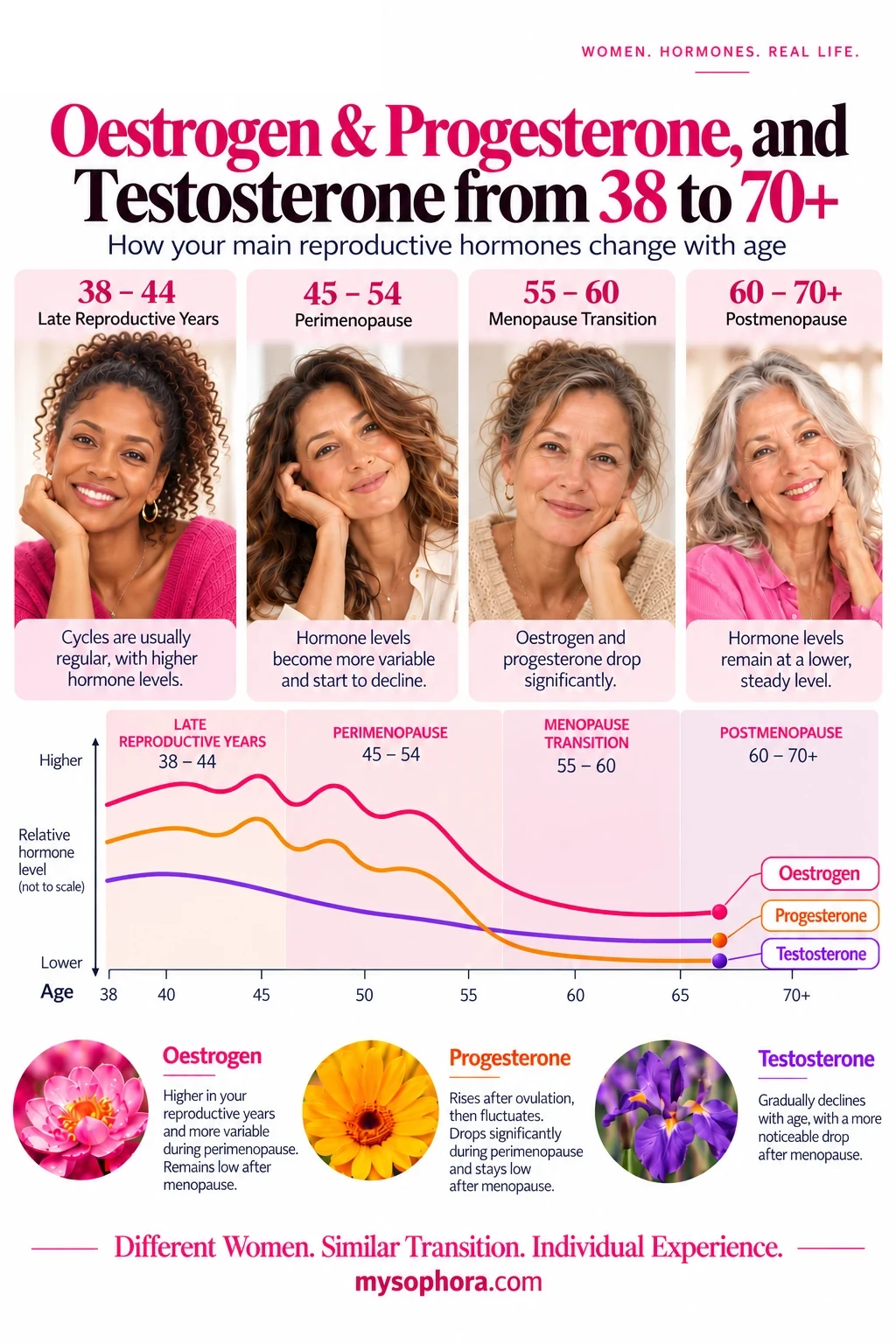
The three main sex hormones
Oestrogen
Oestrogen affects many parts of the body.
It helps regulate the menstrual cycle, supports bone health and keeps vaginal and urinary tissues healthy. It also plays a part in the body’s control of temperature.
During perimenopause, oestrogen levels can fluctuate. These changes may contribute to hot flushes, night sweats, vaginal dryness and changes in periods.
Some people also report changes in sleep, mood or concentration, although these can have other causes too.
Oestrogen changes at different times for different people. One blood test cannot show the full picture throughout perimenopause.
Progesterone
Progesterone is closely linked to ovulation.
After an egg is released, the body produces progesterone. During perimenopause, ovulation may not happen in every cycle. When it does not happen, the usual rise in progesterone may not occur.
This can affect your periods. Progesterone also acts on the brain. However, sleep problems, anxiety and irritability can have several causes. These symptoms alone cannot tell you whether progesterone is low.
Progesterone and oestrogen do not change in exactly the same way or at the same time in everyone.
Read the full progesterone guide
Testosterone
Women produce testosterone too.
The ovaries and adrenal glands produce testosterone. It plays a role in sexual function and other body processes. Levels can change with age.
But a blood test alone cannot explain tiredness, low mood or a drop in sexual interest.
Research supports testosterone treatment for some postmenopausal women diagnosed with a persistent, distressing loss of sexual desire after a full assessment.
The evidence does not support using it as a general treatment for low energy, low mood, memory concerns or concentration problems.
If a change in sexual desire is troubling you, a doctor can help you consider possible causes and suitable options.
Read the full testosterone guide
Other hormones and body systems
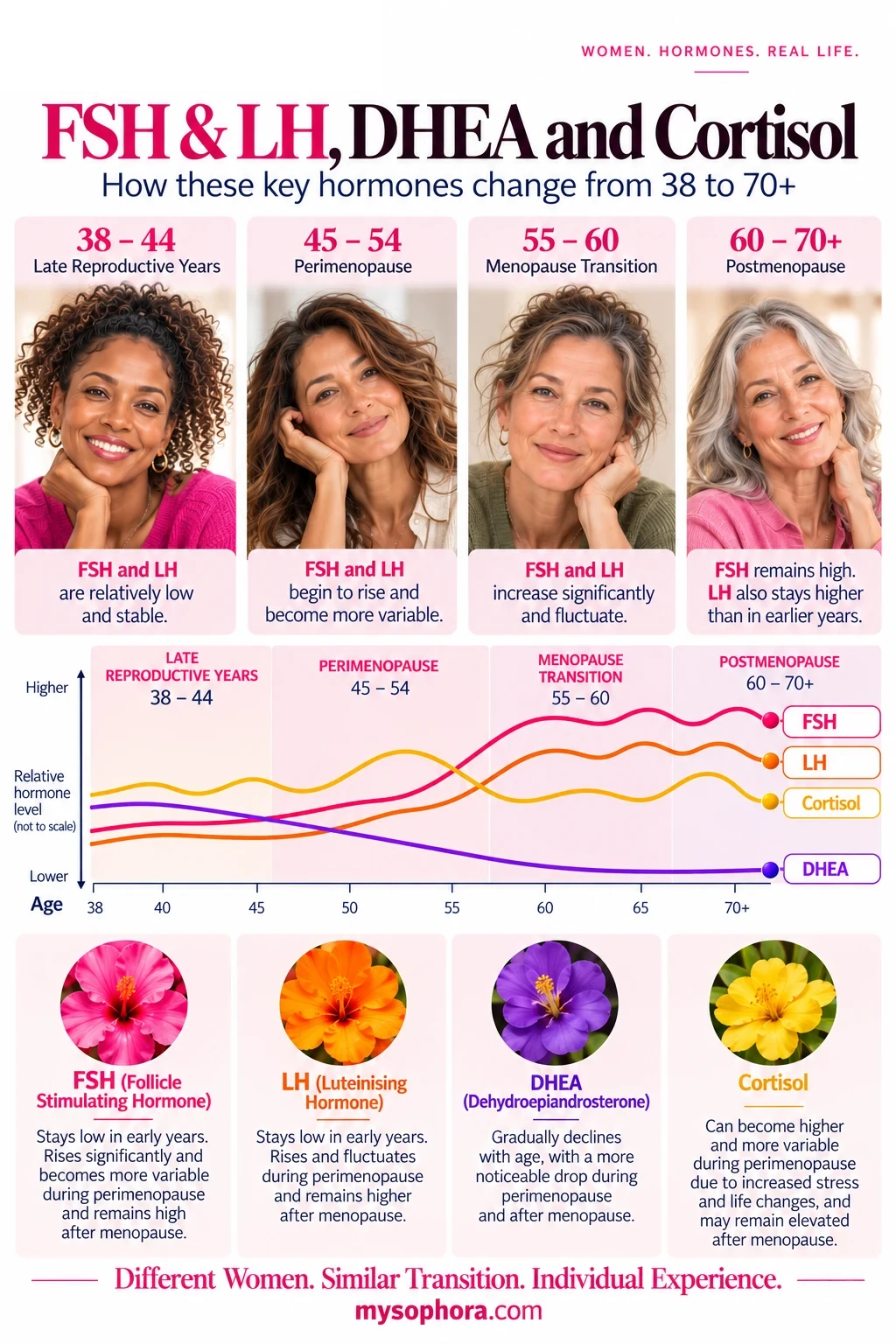
FSH and LH
FSH and LH are hormones released by the pituitary gland in the brain. They help control the menstrual cycle and ovulation.
FSH levels often rise as ovarian function changes. However, levels can fluctuate during perimenopause, so one result may not explain your symptoms.
LH helps trigger the release of an egg. A positive home ovulation test detects a rise in LH, but it does not guarantee that ovulation has occurred.
For people aged 45 and over with typical symptoms and menstrual changes, menopause can usually be identified from symptoms and menstrual history. Hormone blood tests are usually not needed.
Testing may help in some situations, especially at younger ages.
DHEA
DHEA is a hormone made mainly by the adrenal glands. The body can use it to make other hormones, including oestrogens and androgens.
A prescription vaginal treatment containing DHEA may help some people with menopause-related vaginal symptoms. This is different from taking DHEA supplements.
Supplements may have risks and should not be treated as a general menopause remedy.
Cortisol
Cortisol helps the body respond to stress and follows a daily rhythm. Sleep problems, night sweats, worry and the demands of daily life can affect one another.
Waking at night with a racing mind does not prove that cortisol is the cause. Menopause symptoms may contribute, but other causes of disrupted sleep and anxiety may also need attention.
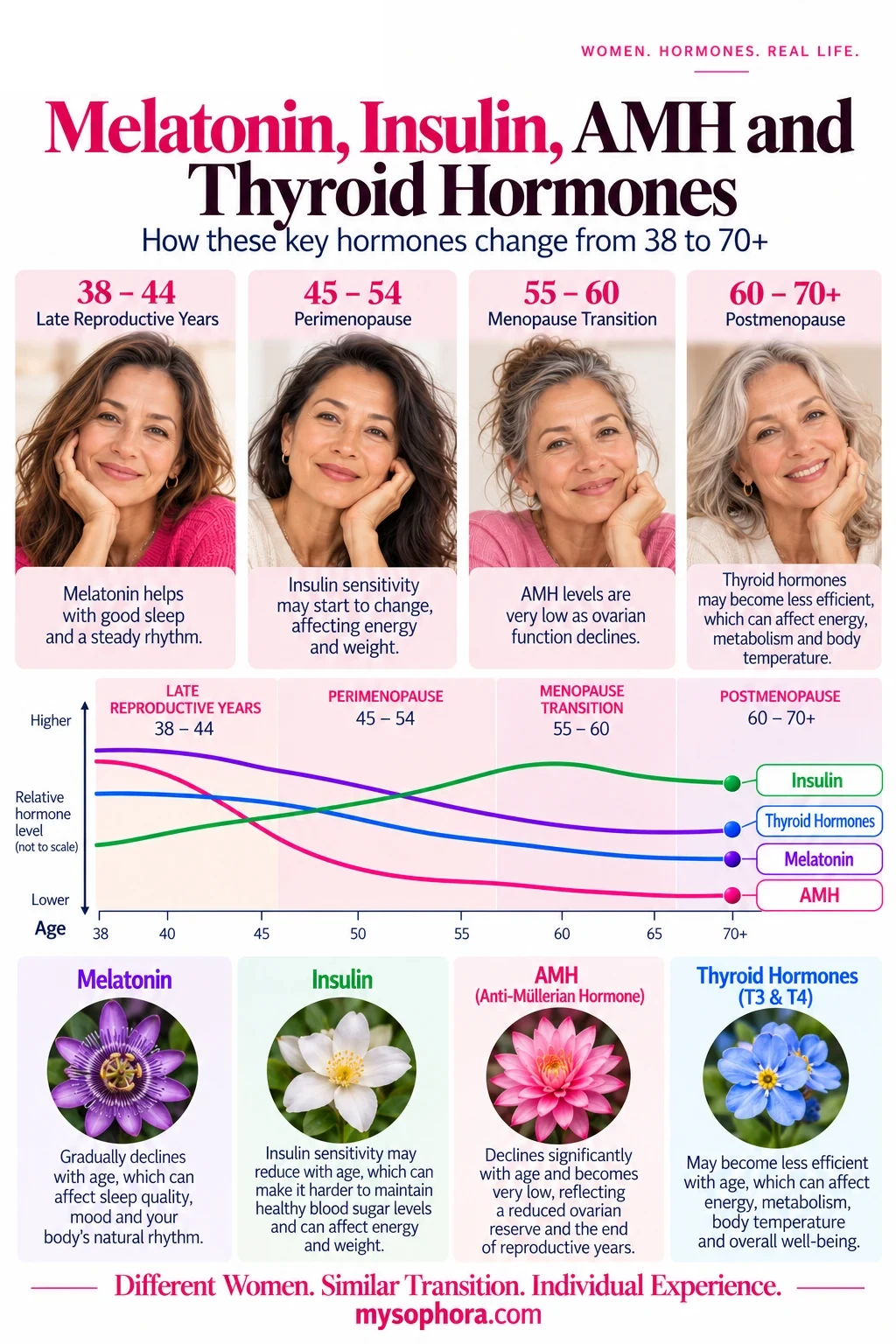
Melatonin
Melatonin helps regulate the body’s sleep timing. Sleep can become harder during midlife for several reasons, including night sweats, stress, changes in routine and other health conditions.
It would be too simple to blame perimenopausal insomnia on melatonin alone. If poor sleep continues, a doctor can help assess possible causes.
Thyroid hormones
Thyroid problems can feel a lot like menopause.
An underactive thyroid may cause tiredness, feeling cold, constipation, dry skin or weight changes. An overactive thyroid may cause palpitations, heat intolerance, anxiety or sleep problems.
If your symptoms suggest a thyroid problem, a doctor may recommend a blood test. It is not necessary for everyone, but it can help when the signs point to a thyroid condition.
Insulin
Insulin helps control the amount of sugar in your blood. Age, activity, sleep, genetics, body composition and hormones can all affect how the body uses insulin.
Changes in weight or waist size are common in midlife, but they do not prove that insulin resistance is present.
A doctor can assess your health and decide whether blood sugar testing is appropriate.
AMH
AMH is produced by cells in developing ovarian follicles.
It can be useful in some fertility assessments, but it does not tell you exactly how many eggs remain or reliably predict when your final period will occur.
AMH is not recommended for identifying menopause in people aged 45 and over. A result should not be used on its own to decide whether perimenopause has begun.
Why experiences differ
People do not all experience menopause in the same way. Age, family history, health conditions, medication and other factors can affect when symptoms begin and how long they last.
Access to reliable information and care also differs. Culture, cost, location and the availability of clinicians with menopause training can affect the support a person receives.
Some people consider herbs or supplements. Evidence varies by product, and natural does not always mean safe. Some products can interact with medicines or be unsuitable for particular conditions.
Discuss a supplement with a doctor or pharmacist before using it to treat symptoms.
What can you do with this information?
You do not need to learn every hormone. Start by writing down the changes that affect you most, when they began and how they affect daily life.
This can help you explain your concerns clearly when speaking with a doctor.
You might ask:
- Could these symptoms be related to perimenopause, or could another condition explain them?
- Would any tests be useful for my age and symptoms?
- What treatments could help with the symptoms that affect me most?
- How will we know whether a treatment is helping?
Sophora’s The Answers You Need helps you organise your experience into a doctor-ready summary from four questions. It can support a conversation with a clinician, but it does not diagnose a condition or replace medical care.
Explore the individual hormone guides
The three main sex hormones
Learn about oestrogen and its role in the menopause transition.
Understand progesterone, ovulation and changes in menstrual cycles.
Explore what research says about testosterone in women.
Questions you may have
How many hormones are involved in perimenopause?
There is no official number. Oestrogen and progesterone are central to changes in the menstrual cycle. FSH and LH help regulate ovarian function.
Other hormones and body systems affect sleep, stress, metabolism and general health. Which ones matter most depends on your symptoms and medical history.
Can one hormone explain all my symptoms?
Usually, symptoms alone cannot identify one hormone as the cause.
Menopause may be part of the explanation, but thyroid problems, medication, sleep difficulties and other health conditions can cause similar symptoms. A doctor can help you work through the possibilities.
Should I get all my hormones tested?
No. For people aged 45 and over with typical menopause symptoms, blood tests are usually not needed to identify perimenopause or menopause.
Tests may be useful in particular circumstances, including suspected early menopause or another medical condition. A doctor can advise which tests, if any, are appropriate.
Why do my symptoms change from month to month?
During perimenopause, ovarian activity and hormone levels can fluctuate. Symptoms may change as a result, and sleep, stress, medication and other health factors can also affect how you feel.
A change in symptoms does not automatically point to one hormone.
Will everything settle after menopause?
Some symptoms improve over time, but others can continue after periods stop. Hot flushes and night sweats may last for years, and vaginal or urinary symptoms can persist.
If symptoms affect your daily life, ask a doctor about options that may help.
When should I speak with a doctor?
Consider making an appointment if symptoms affect your sleep, mood, work, relationships or everyday activities, or if you are unsure what is causing them.
Seek prompt medical advice for unusual bleeding, particularly bleeding after menopause, or symptoms that are new, severe or worrying.

A useful next step
Understanding the main hormones can help you ask better questions. Sophora Companion gives you a private place to explore menopause-related questions and organise what you want to understand.
You’re Not Alone Anymore. Meet Sophora. Your Menopause Companion
One payment. Twelve months. No subscription.
Medical information reviewed against clinical guidance
Last reviewed: October 2026. This page provides general information and is not a diagnosis or a substitute for personalised medical advice.
Speak with a qualified healthcare professional about symptoms, tests and treatment options.
Sources
- National Institute for Health and Care Excellence (NICE), Menopause: identification and management
- Global Consensus Position Statement on the Use of Testosterone Therapy for Women
- National Health Service (NHS), Menopause