
Sophora · Breast Comfort
Breast Perspiration: Why Do Breasts and Under-Breast Areas Sweat?
Why moisture collects under the breasts, how menopause can add to the problem, and what helps before sweat, friction and skin irritation become a miserable little alliance.
Breast perspiration is ordinary biology occurring in an inconvenient location. Sweat under the breasts can collect where skin touches skin, where airflow is limited and where a bra band sits for hours.
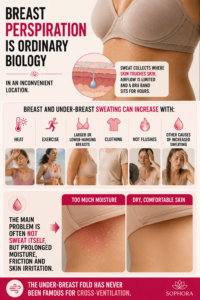
Breast and under-breast sweating can increase with heat, exercise, larger or lower-hanging breasts, clothing, hot flushes and other causes of increased sweating. The main problem is often not sweat itself, but prolonged moisture, friction and skin irritation.
The under-breast fold has never been famous for cross-ventilation.
Why do breasts and the area underneath them sweat?
Sweat is part of normal temperature regulation. Under the breasts, moisture can remain trapped because the skin fold limits evaporation and creates friction between adjacent surfaces.
The amount varies with climate, physical activity, body size, breast size and shape, clothing and individual sweating patterns. A tight or poorly ventilated bra can make the area feel hotter and keep damp fabric against the skin.
In hot and humid climates, the problem can become a daily comfort issue rather than an occasional summer inconvenience.
Can menopause make breast sweating worse?
Menopause does not create special breast sweat glands, but hot flushes and night sweats can increase whole-body sweating, including across the chest and under the breasts.
Vasomotor symptoms, the clinical term for hot flushes and night sweats, involve episodes of heat and sweating associated with changes in temperature regulation during the menopause transition.
If you wake with damp nightwear and bedding as well as moisture beneath the breasts, address the whole heat-and-sleep problem rather than treating the under-breast fold as an isolated tropical country.
Why does sweat under the breasts cause soreness?
Moisture plus friction can damage the skin barrier. In a skin fold, this can contribute to intertrigo, an inflammatory rash caused by friction, heat and moisture, sometimes with secondary fungal or bacterial involvement.
Intertrigo can appear red or darker than surrounding skin depending on skin tone. It may sting, itch, burn or become sore. Persistent moisture can make the surface fragile.
Not every under-breast rash is intertrigo, and not every rash is fungal. Treating every red patch with whatever cream is nearest can delay the right diagnosis.
What can you do about under-breast sweat today?
Start with moisture control and friction reduction. Wash gently, dry the fold thoroughly without aggressive rubbing, change damp clothing or bras, and avoid leaving sweaty fabric against irritated skin.
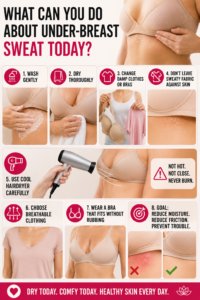
A cool hairdryer setting can help dry a difficult skin fold without rubbing, provided it is used carefully and never hot enough to burn the skin.
During the day, breathable clothing and bras that fit without repeated rubbing can improve comfort. The goal is not to eliminate normal sweating completely. It is to stop moisture from sitting against the skin long enough to cause trouble.
What kind of bra helps with breast perspiration?
Look for fit and fabric features that reduce trapped moisture and friction: a stable band, cups that contain the breast properly, soft seams, breathable or moisture-managing materials and enough lift to reduce prolonged skin-on-skin contact where possible.
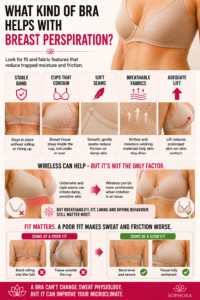
A wireless bra can be comfortable when underwire and rigid seams irritate damp skin, but wireless construction is not automatically breathable. Fabric, lining, fit and drying behaviour still matter.
If the band is rolling into the fold or the cup is allowing tissue to sit outside its intended position, remeasure. A bra cannot change sweat physiology, but it can either improve the microclimate against your skin or make eight hours feel much longer.
What about night sweats and damp sleepwear?
If sweating is mainly nocturnal, treat the sleep environment as part of the problem. Lightweight, soft, breathable nightwear and bedding can make moisture and heat easier to manage.
Cool soft bamboo nightwear and breathable bedding can be useful comfort choices because the aim is to reduce heat retention and improve how fabric feels against damp skin. These products do not treat the hormonal cause of night sweats.
If night sweats are new, severe, persistent or accompanied by unexplained weight loss, fever or feeling unwell, seek medical assessment rather than assuming menopause is the only possible cause.
Should you use powder or antiperspirant under the breasts?
Products used in skin folds need care because irritated, broken or infected skin may react differently from intact skin. Powders can cake when mixed with heavy moisture, and fragranced products may irritate sensitive skin.
Antiperspirants reduce sweating by temporarily blocking sweat ducts and are used on several body areas, but under-breast use should follow product instructions and should not be applied to broken or severely irritated skin. A pharmacist or clinician can advise when sweating is persistent or difficult to control.
Do not combine multiple strong products on an inflamed fold and then ask the skin to remain philosophical.
When could the problem be more than ordinary sweat?
Seek assessment for a persistent or recurrent rash, cracked or weeping skin, unpleasant discharge, spreading redness, marked pain, fever, or a rash that does not improve with basic moisture and friction control.
People with diabetes or reduced immunity may have additional risk from skin infections and should seek appropriate clinical advice for persistent fold problems.
A new breast skin change that is not confined to a typical friction fold, especially with swelling, peau d’orange-like dimpling or other breast changes, should be medically assessed.
Start here: the Sophora comfort plan
First, dry the area gently. Second, change damp fabric. Third, reduce friction and reassess bra fit. Fourth, make the daytime and nighttime environment cooler and more breathable. Fifth, get persistent rash or unusual breast changes assessed.
If hot flushes and night sweats are driving the problem, the wider menopause picture matters. Understanding the pattern can help you choose evidence-based medical or non-drug options for vasomotor symptoms while practical products make daily life more comfortable.
You are allowed to solve the damp bra problem today while making a more considered decision about the menopause symptoms underneath it.
Questions you may still be asking
Is sweating under the breasts normal?
Yes. Sweat can collect under the breasts because heat, moisture and limited airflow occur in the skin fold. Persistent irritation or rash needs appropriate care.
Can menopause cause sweating between and under the breasts?
Hot flushes and night sweats can increase sweating across the chest and other body areas, including between and under the breasts.
How do I keep the area under my breasts dry?
Dry gently after washing, change damp clothing, use breathable fabrics, reduce friction and wear a correctly fitted bra. Persistent excessive sweating or rash deserves professional advice.
Why does the sweat under my breasts smell?
Sweat itself is largely odourless, but skin microorganisms can break down sweat components and moisture can support skin-fold problems. Persistent strong odour with rash or discharge should be assessed.
Can breast sweat cause a fungal rash?
Warm, moist skin folds can support secondary fungal overgrowth, but not every rash is fungal. Persistent or recurrent rash should be correctly identified before repeated treatment.
Remember This
You now know: Under-breast sweat is common, but trapped moisture and friction can turn ordinary perspiration into soreness and rash.
One thing to do: Dry the fold gently, change damp fabric and check whether your bra is trapping moisture or repeatedly rubbing the same area.
Hold onto this: Comfort measures can help ordinary sweating. Persistent rash, broken skin, discharge or unusual breast changes need proper assessment.
Related Reading
→ Rash Under the Breast How sweat, friction and skin-fold inflammation connect.
→ Why Do My Breasts Smell? Sweat, skin bacteria and when odour needs attention.
→ Best Bra for Breast Sweat Fit and fabric features that matter.
No Talking To A Stranger About Your Private Matters. No Waiting. No Judgement.
Personal Answers. It’s About You. Understand What’s Happening To You. No Records Kept.
One-off payment. 12 Months Service. No Subscriptions.
You’re Not Alone Anymore. Meet Sophora. Your Menopause Companion
References
References support factual sections and do not establish the cause of an individual’s sweating or rash.
- NHS. Excessive sweating and menopause symptom information.
- DermNet. Intertrigo. Skin-fold inflammation, moisture and friction context.
- American Academy of Family Physicians. Intertrigo and secondary skin infections.
- The Menopause Society. Vasomotor symptoms and menopause treatment context.
- Healthdirect Australia. Excessive sweating and skin-rash information.
- Government of Canada menopause and breast-health resources.
Last reviewed: July 2026 · Review due: October 2026 · Educational information only. This article does not replace personal medical advice, diagnosis or treatment.