
Sophora · Breast Comfort
What to Put Under Breasts for Sweating
If the skin under your breasts keeps ending up wet, sore or rubbed raw, the difficult part is often knowing what belongs there. Powder, cream and antiperspirant do different jobs. The condition of your skin tells you where to start.
You dry beneath your breasts after a shower, put on a clean bra, and a few hours later the fold is damp again. Perhaps the skin has started rubbing. Perhaps there is redness too. At that point, reaching for powder, deodorant, cream or whatever is already in the bathroom can feel reasonable.
But sweat, rubbing and a rash are different problems. What helps one can irritate another. The first useful question is not, “Which product is best?” It is, “What is happening to my skin right now?”
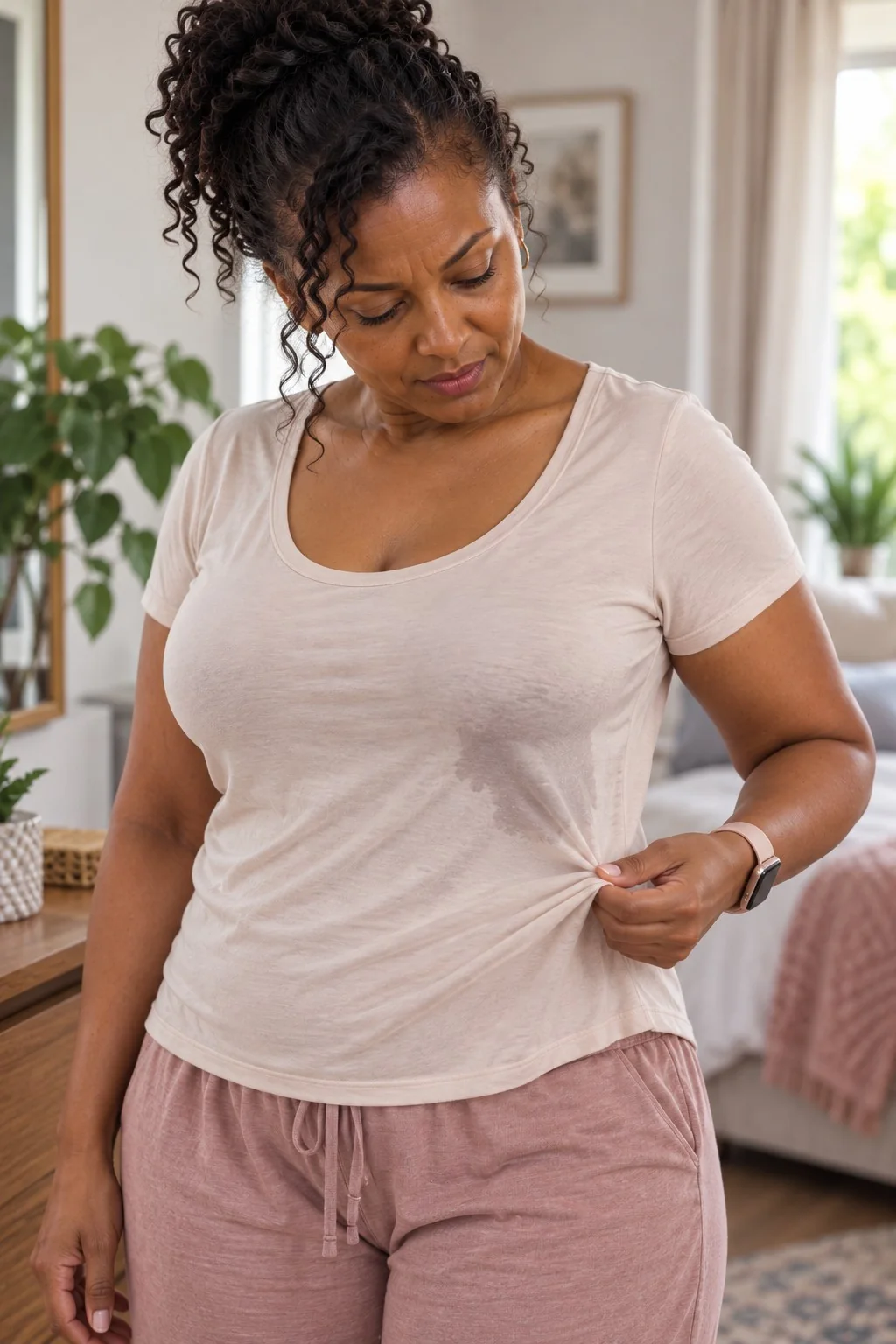
Quick answer: If the skin is intact and the main problem is sweat, start by washing gently, drying the fold fully, changing damp fabric and reducing rubbing. A suitable antiperspirant can reduce sweat. Powder may absorb limited moisture or reduce friction. A barrier product can protect intact skin from moisture and rubbing. If you have a persistent rash, cracked or weeping skin, spreading redness, discharge, marked pain, fever, or you feel unwell, get the area assessed rather than adding another product.
What does the skin under your breasts need right now?
You do not need to diagnose every skin condition yourself. You do need to notice whether you are dealing mainly with wet skin, rubbing, irritated skin or a rash that is not settling.
| What you notice | What may help | What to keep in mind |
|---|---|---|
| Wet but otherwise normal skin | Drying, dry fabric, a suitable antiperspirant | Antiperspirant reduces sweat. Deodorant mainly targets odour. |
| Moisture plus rubbing | Drying, better fit, soft absorbent fabric, a suitable barrier product | Change fabric once it becomes damp. |
| Red or sore intact skin | Reduce moisture and friction first | Avoid layering several active or fragranced products onto irritated skin. |
| Persistent or recurrent rash | Medical or pharmacy assessment | Fungal infection is only one possible cause. |
| Cracks, weeping, discharge, spreading redness, marked pain or fever | Medical assessment | Do not keep testing new cosmetic products on damaged skin. |
Intertrigo is inflammation where two skin surfaces meet. Beneath the breast, warmth, trapped moisture and rubbing can irritate the skin. Yeast or bacteria can sometimes become involved, but redness beneath a breast does not automatically mean infection.
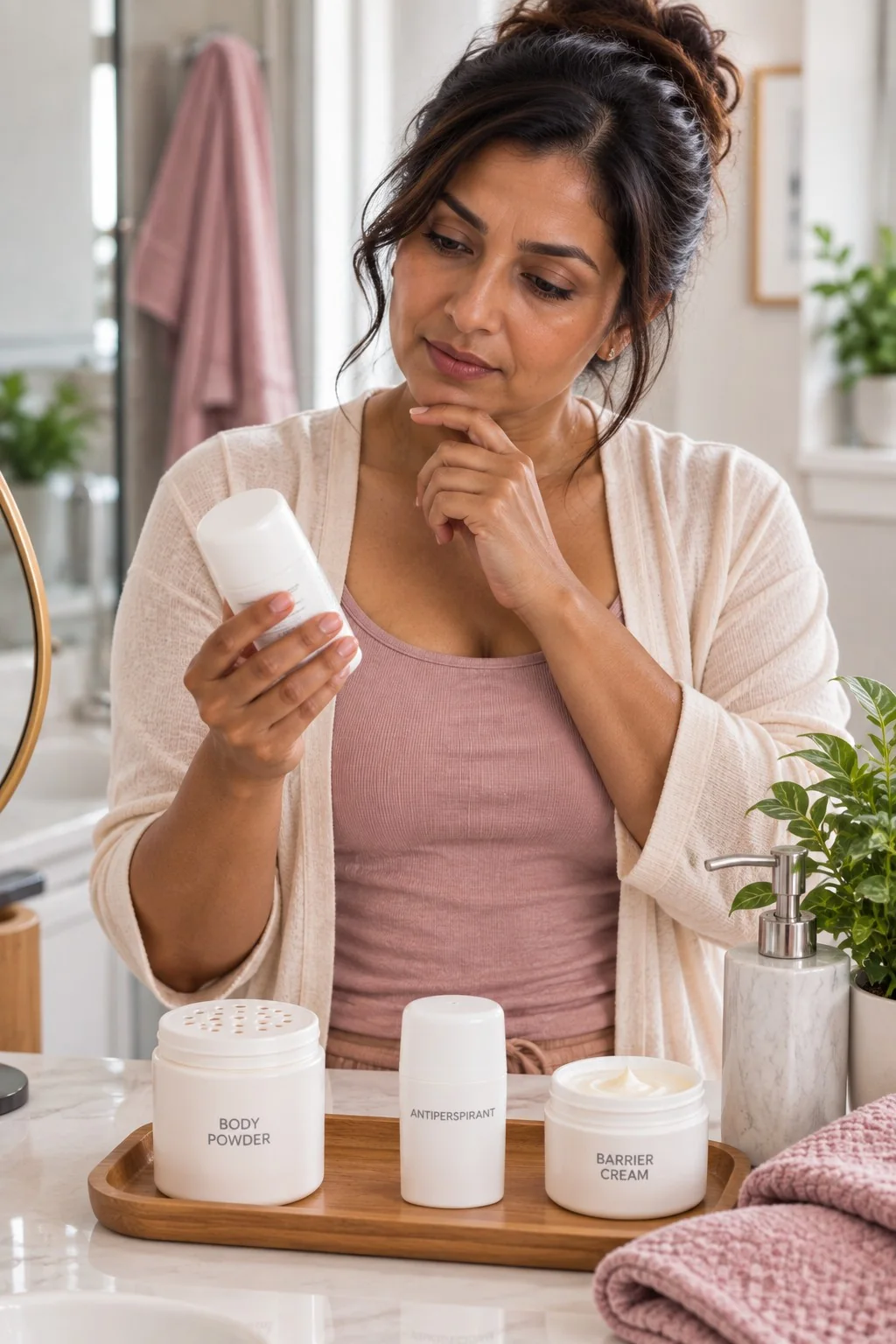
Does powder help with sweat under the breasts?
Powder can help absorb limited moisture and reduce rubbing, but it does not stop sweat production.
If the skin is intact and only mildly damp, a small amount of a suitable body powder may help keep the surfaces drier for a while. It can be less useful when sweating is heavy because powder can mix with moisture and form clumps.
Powder should not be treated as the answer to a persistent rash. If the skin is broken, weeping or increasingly painful, adding powder can make assessment and skin care more difficult.
Can antiperspirant be used under the breasts?
For intact skin where sweating itself is the main problem, a suitable antiperspirant can reduce the amount of sweat reaching the fold.
Antiperspirants work differently from deodorants. Antiperspirants reduce sweat flow. Deodorants mainly reduce or mask odour.
Skin beneath the breast can be more sensitive than the underarm. Check that the product is suitable for the area, follow its directions, and stop if it causes significant burning or irritation. Do not apply it to cracked, raw or broken skin.
What can you use when rubbing is the real problem?
If the skin is intact but rubbing is making it sore, reducing friction may matter more than trying to eliminate every trace of moisture.
A suitable barrier or anti-chafing product can reduce contact between damp skin surfaces. A clean, soft absorbent textile can also help separate the breast from the fold, provided it does not bunch, press into the skin or stay wet for hours.
Replace any fabric once it becomes damp. Material that remains wet against the skin can keep the fold warm and moist, which is exactly the environment you are trying to change.
Should you use a barrier cream under your breasts?
A barrier product can protect intact skin from moisture and friction. It does not tell you what caused a rash, and it does not treat every infection.
If a cream makes the area sting or look worse, stop using it. If you find yourself repeatedly covering the same rash without improvement, the next useful step is assessment rather than another layer of cream.
Should you use antifungal cream for an under-breast rash?
Not automatically. Candida can affect the warm, moist fold beneath the breast, but irritation, contact dermatitis, psoriasis and bacterial conditions can also occur there.
A fungal rash needs the right antifungal treatment. A non-fungal rash may need a different approach. If the rash keeps returning, is getting worse or has not responded as expected, a pharmacist, dermatologist or doctor can help identify what you are actually treating.
What should you put between your breast and the skin?
If your breast rests against the skin beneath it, a clean, soft, absorbent textile made for skin contact can help separate the two surfaces and collect moisture.
The material should lie smoothly and be changed when damp. Avoid rough fabric, material that sheds fibres, thick folds that create pressure, or improvised items that remain wet against the skin.
The useful job is simple: less skin-on-skin rubbing and less time sitting in moisture.
Can changing your bra actually help?
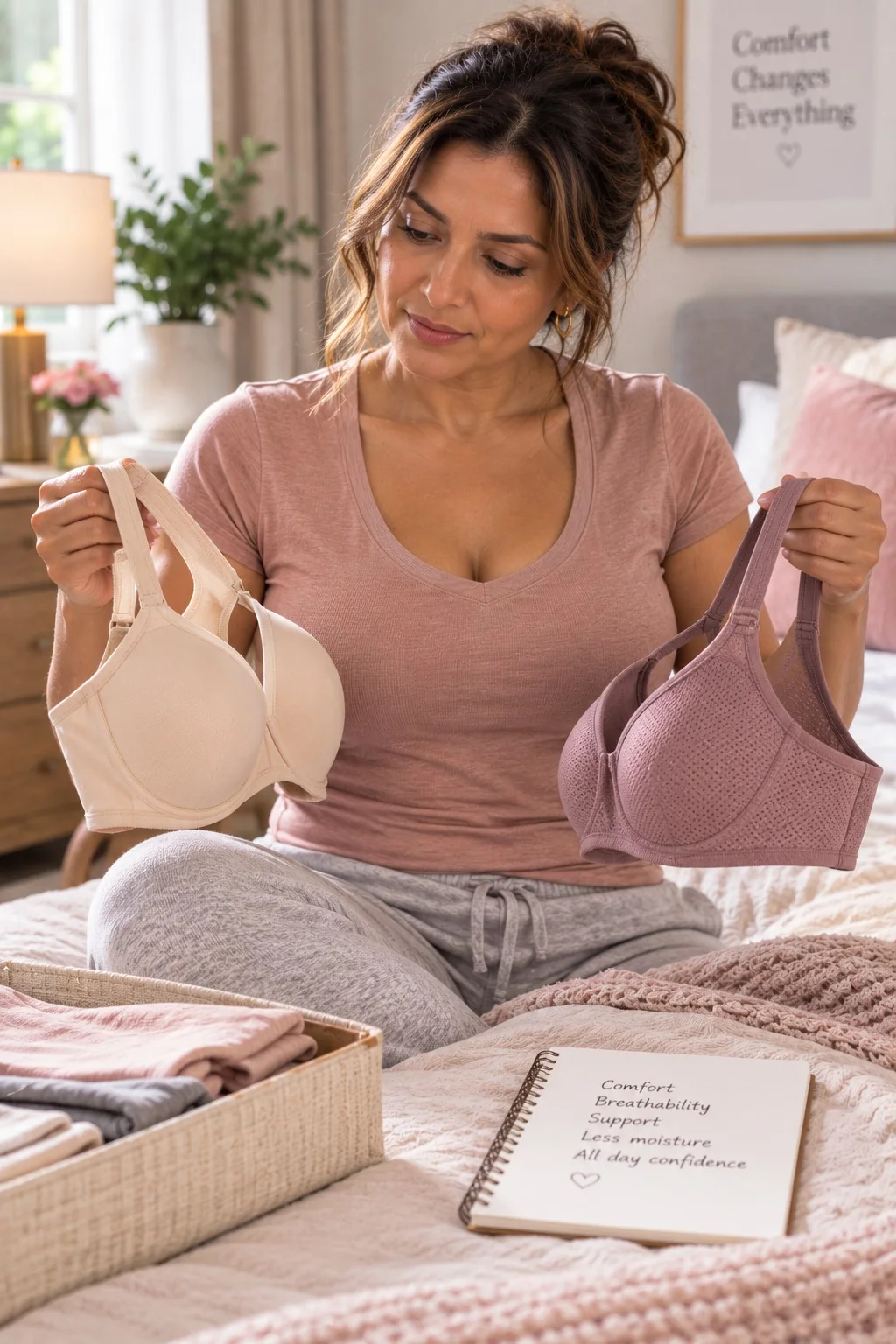
A bra cannot prevent your sweat glands from working, but fit can change how much rubbing and skin-on-skin contact happens beneath the breast.
A band that folds into the breast crease, a cup that does not contain the breast, or fabric that stays wet can make an already damp area harder to manage. Look for enough cup depth, stable support, smooth contact surfaces and fabric that feels comfortable in heat.
If an underwire presses into damp or tender skin, a supportive wireless option may feel better. If your current bra repeatedly rolls, digs or leaves breast tissue sitting against the fold, rechecking your size and fit is worthwhile.
What if menopause is making you sweat more?
If hot flushes or night sweats are leaving your chest and breast area wet, products beneath the breast can help with the local moisture, but they do not treat the hot flush or night sweat itself.
Hot flushes and night sweats are vasomotor symptoms. They can include intense heat and sweating, and for some women the perspiration is enough to interrupt sleep, work or normal activity.
That gives you two separate jobs. Keep the breast fold dry and comfortable, and decide whether the hot flushes or night sweats themselves need attention. Hormone therapy is an effective treatment for bothersome vasomotor symptoms for appropriate candidates, and evidence-based nonhormone prescription options also exist. A doctor can help weigh those choices against your health history and preferences.
Heat, sweating and menopause around the world
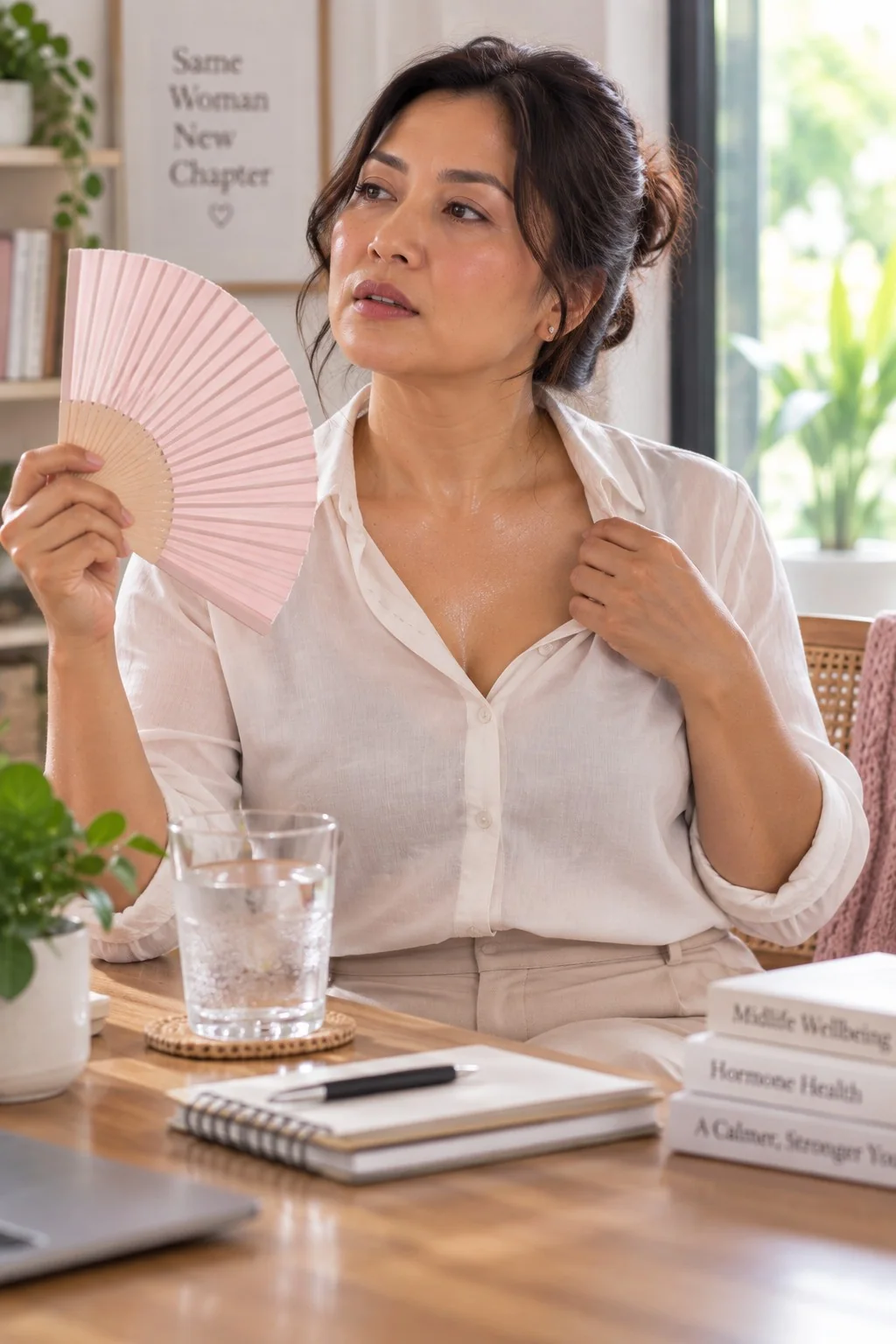
A hot climate can make damp skin harder to manage, but heat outside the body and a menopausal hot flush are not the same thing.
Research across Africa, Asia, the Middle East and the Americas shows that women do not experience or describe menopause in exactly the same way. Climate can affect comfort and, in some studies, how troublesome symptoms feel. But temperature alone does not explain menopausal hot flushes and sweating. Culture, clothing, health, access to care and the way symptoms are understood can matter too.
That distinction is useful if you live somewhere hot. You can be sweating because the day is hot, because you are physically active, because you are having a hot flush, or because several of those things are happening together. The dampness beneath your breasts may feel the same even when the reason behind it is different.
What should you avoid putting on sore under-breast skin?
Avoid stacking several fragranced, medicated or highly active products onto inflamed skin when you do not know what you are treating.
Do not scrub the fold aggressively. Do not use an antiperspirant on broken or severely irritated skin. Do not assume that every red rash needs antifungal cream. If basic drying and friction control are not helping, assessment gives you more useful information than another product trial.
When should a doctor look at it?
Get medical advice if the rash is persistent or keeps returning, or if you have broken or weeping skin, discharge, spreading redness, marked pain, swelling, fever or you feel unwell.
If you have diabetes or reduced immunity, seek advice earlier for a persistent skin-fold problem because infection can carry greater risk.
A new change to the breast skin that extends beyond the usual fold also deserves attention, especially if you notice breast swelling, dimpling, a nipple change or another new breast change.
If you are standing in the bathroom wondering what to use, start here
If the skin is intact, wash gently and dry it fully. Put on dry fabric. Reduce rubbing. Then choose one intervention for the problem you actually have: antiperspirant for sweat, a suitable powder for limited moisture or friction, or a barrier product for rubbing and moisture exposure.
If there is a rash, do not make the product decision by colour alone. Red skin beneath a breast has more than one possible cause.
And if hot flushes or night sweats are repeatedly soaking your chest, the breast fold may be where you feel the consequence, while the useful conversation is also about the sweating itself.
Questions you may still be asking
Remember This
You now know: Powder, barrier products and antiperspirants do different jobs. The right choice depends on whether the main issue is sweat, moisture, rubbing or a rash.
One thing to do: Look at the skin before reaching for a product. If it is intact, start with drying and friction control. If it is damaged, painful or not improving, get advice.
Hold onto this: You do not need more products. You need the right response to what your skin is doing today.
Related Reading
Breast Perspiration:
Why breasts and the area beneath them sweat.
Rash Under the Breast:
Causes, relief and when to get checked.
Best Bra for Breast Sweat:
What helps with heat, moisture and chafing.
When the sweating is only one part of what has changed
You may already know what to do for the damp skin and still be wondering why you are suddenly hotter, waking wet at night, changing bras more often or dealing with several changes at once.
You can tell Sophora what has been happening in your own words. The changes you choose to share can be considered in the context of your own circumstances, so you do not have to begin from the beginning every time a new question appears.
Sophora can also help you organise what you have noticed and prepare the questions you want answered when you speak with your doctor or healthcare professional.
Sophora does not diagnose you and does not replace your doctor or healthcare professional.
One payment. Twelve months. No subscription.
You’re Not Alone Anymore. Meet Sophora. Your Menopause Companion
Evidence and References
-
DermNet. Intertrigo. Clinical overview of moisture, friction, inflammation, infection and management in skin folds.
DermNet Intertrigo
. -
DermNet. Antiperspirant. Clinical overview of antiperspirant ingredients, use, body sites and irritation precautions.
DermNet Antiperspirant
. -
DermNet. Hyperhidrosis. Clinical overview of excessive sweating and topical antiperspirants.
DermNet Hyperhidrosis
. -
The Menopause Society. Hot Flashes. Patient guidance on vasomotor symptoms and evidence-based treatment options.
The Menopause Society
. -
Eleje GU et al. Contextualising Menopause in Nigeria: A Qualitative Analysis From the MARiE Project. BJOG. 2026;133(6):1227-1240.
PubMed
. -
Hunter MS et al. International Menopause Society study examining climate, altitude, temperature and vasomotor symptoms in urban Indian regions. Climacteric. 2014.
PubMed
. -
MARIE-Brazil investigators. Menopause in Brazil: lived experiences, inequities and opportunities for inclusive care. 2026.
PubMed
. - Research examining menopausal experiences among women in Zimbabwe and South Africa, including the influence of social and cultural context. 2025.
- Cross-cultural research examining vasomotor symptoms and menopause experiences across Asian populations, including China and Japan.
- Research examining vasomotor symptoms among peri- and postmenopausal women living in the hot desert climate of the United Arab Emirates.
- Latin American research examining vasomotor symptoms among women in Chile, Ecuador and Panama and differences associated with climate and altitude.
Last reviewed: September 2026 · Review due: December 2026 · Educational information only. This article does not replace personal medical advice, diagnosis or treatment.