Sophora · Bra Fit & Breast Comfort
Best Bra for Breast Sweat: What Actually Helps With Heat, Moisture and Chafing
Forget magical fabric claims. The right bra for breast sweat has to manage fit, movement, friction and moisture in the body and climate you actually live in.
If your bra becomes damp before lunch, rolls into the under-breast fold or turns a hot flush into a private weather system, the problem is not solved by the word breathable printed on a product page.
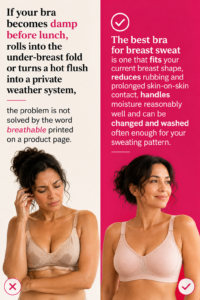
The best bra for breast sweat is one that fits your current breast shape, reduces rubbing and prolonged skin-on-skin contact, handles moisture reasonably well and can be changed and washed often enough for your sweating pattern.
No bra can switch off sweat glands. A good one can make the hours between getting dressed and getting home considerably less swamp-adjacent.
What should a bra for breast sweat actually do?
A bra for breast sweat should manage the consequences of sweating rather than promise to stop normal perspiration. The useful goals are reducing friction, limiting prolonged dampness and supporting the breast in a position that improves comfort.
For some women, lift can reduce the amount of skin-on-skin contact beneath the breast. For others, the key improvement is simply a band and cup shape that stop rubbing the same irritated area all day.
The best design depends on breast size, shape, activity, climate and how heavily you sweat.
Is breathable fabric enough?
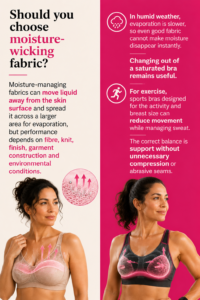
No. Fabric matters, but construction and fit matter too. A breathable textile cannot rescue a cup that compresses breast tissue or a band that folds into a damp skin crease.
Look at the whole bra: outer fabric, lining, padding, seams, elastic, cup depth and drying behaviour. Thick foam may feel hotter for some women, while very thin fabric may fail to provide the support they need.
Marketing likes one-word solutions. Breasts, inconveniently, are three-dimensional.
Should you choose moisture-wicking fabric?
Moisture-managing fabrics can move liquid away from the skin surface and spread it across a larger area for evaporation, but performance depends on fibre, knit, finish, garment construction and environmental conditions.
In humid weather, evaporation is slower, so even good fabric cannot make moisture disappear instantly. Changing out of a saturated bra remains useful.
For exercise, sports bras designed for the activity and breast size can reduce movement while managing sweat. The correct balance is support without unnecessary compression or abrasive seams.
Is a wireless bra better for breast sweat?
A wireless bra can be more comfortable when rigid underwire contact irritates sweaty or tender skin, but wireless does not automatically mean cool, breathable or supportive.
A good wireless design still needs band stability, adequate cup capacity, useful containment and fabric recovery. If the breast collapses into the under-breast fold and moisture remains trapped, removing the wire alone may not solve the problem.
For many midlife women, a soft supportive wireless bra is a sensible everyday starting point because it can combine comfort with enough structure to reduce movement and friction.
What bra features matter most?
Prioritise fit before features. Then look for a stable band, cups with enough depth, soft contact surfaces, seams that do not rub, straps appropriate to the load and fabrics suited to your heat and activity level.
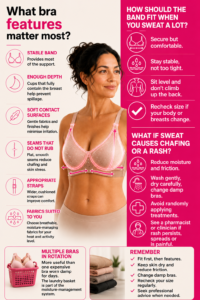
Wider straps may improve comfort for some larger-breasted women, but straps are not the main support system. If the band rides upward, the straps often end up doing emergency overtime.
Multiple bras in rotation can be more useful than one expensive bra worn damp for days. The laundry basket is part of the moisture-management system, whether fashion marketing admits it or not.
How should the band fit when you sweat a lot?
The band should be secure enough to remain stable but not so tight that it creates painful pressure, deep friction or breathing discomfort. It should sit level rather than climb up the back.
When skin is damp, repeated movement can increase chafing. A band that shifts constantly may irritate the fold, while one that is excessively tight can also create pressure and friction.
Recheck size if your body or breasts have changed during perimenopause or menopause. The number on an old bra is not evidence about your present body.
What if sweat causes chafing or a rash?
If skin is already inflamed, the priority is to reduce moisture and friction and identify whether the problem is simple irritation, intertrigo or another skin condition.
Wash gently, dry carefully, change damp bras and avoid repeatedly applying random treatments. Fungal or bacterial infection can complicate damaged skin, but not every rash is infectious.
Persistent, recurrent, spreading, weeping or painful rash deserves assessment by a pharmacist or clinician.
What about menopause hot flushes?
A better bra can improve comfort, but it cannot treat vasomotor symptoms, the clinical term for hot flushes and night sweats.
If sudden heat and sweating are frequent or disruptive, consider the wider evidence-based options for menopause symptom management. Medical and non-drug choices depend on symptom severity, health history and personal preference.
Meanwhile, practical layers matter. A bra that can cope with moisture, cool soft bamboo nightwear and breathable bedding can reduce the daily inconvenience while you decide what broader support is right for you.
How many bras do you need if you sweat heavily?
There is no universal number, but you need enough rotation to avoid repeatedly wearing damp or incompletely dried bras.
Your climate, laundry routine, activity and sweating pattern determine what is practical. Someone exercising daily in a humid climate has different needs from someone with occasional hot flushes in a cool environment.
Think in terms of a working rotation: everyday support, exercise support if needed, and a clean dry alternative when the first bra becomes saturated.
When is sweating more than a bra problem?
Seek advice when sweating is excessive, new or unexplained, or when it is accompanied by symptoms such as fever, unexplained weight loss or feeling unwell. Persistent skin breakdown, discharge, spreading redness or significant pain also needs assessment.
Night sweats are common in the menopause transition, but menopause is not the only possible cause of night sweating.
A bra is a comfort tool. It should not be asked to diagnose an endocrine condition, infection or breast skin change.
Start here: the Sophora buying checklist
First, remeasure. Second, identify where sweat and rubbing are worst. Third, choose enough support to reduce unwanted movement and skin contact. Fourth, assess fabric and seam comfort. Fifth, make sure the bra can be washed and dried within your real routine. Sixth, address hot flushes or persistent skin problems separately.
Do not buy six copies before wearing one through a normal hot day. Test the bra in the conditions that actually challenge you.
The best bra for breast sweat is not the one with the most technological adjectives. It is the one you can wear through your real day without counting the minutes until liberation.
Questions you may still be asking
What is the best bra material for breast sweat?
There is no single best fibre for everyone. Look for a combination of moisture management, breathability, softness, drying performance and enough structural support for your breast size and activity.
Are cotton bras good for under-breast sweat?
Cotton can feel soft and breathable, but it can retain moisture when heavily saturated. Fabric construction, blend, fit and how quickly you can change a damp bra all matter.
Are wireless bras better for sweaty breasts?
They can reduce rigid contact points for some women, but wireless bras still need good fit, support and suitable fabric. Wireless alone does not guarantee moisture control.
Should I wear a bra at night if I have breast sweat?
There is no requirement to wear one. If movement is uncomfortable, a soft sleep bra may help, but if it traps heat or moisture, sleeping without one may be more comfortable.
How do I stop chafing under my breasts?
Reduce moisture and repeated friction, change damp clothing, check bra fit and seek advice for persistent or broken skin. Recurrent rash may need a specific diagnosis.
Remember This
You now know: The best bra for breast sweat manages fit, movement, friction and moisture together. Fabric alone cannot rescue poor construction or poor fit.
One thing to do: Wear one candidate bra through a genuinely hot or active day before buying several copies.
Hold onto this: A bra can improve comfort. Persistent sweating, recurrent rash or unexplained systemic symptoms need their own assessment.
Related Reading
→ Breast Perspiration Why sweat collects under and between the breasts.
→ Rash Under the Breast Moisture, friction and intertrigo.
→ Why Do My Breasts Smell? Sweat, fabric and skin microorganisms.
No Talking To A Stranger About Your Private Matters. No Waiting. No Judgement.
Personal Answers. It’s About You. Understand What’s Happening To You. No Records Kept.
One-off payment. 12 Months Service. No Subscriptions.
You’re Not Alone Anymore. Meet Sophora. Your Menopause Companion
References
References support factual sections and do not establish that one bra material or construction is best for every woman.
- University of Portsmouth Research Group in Breast Health. Breast support, movement and bra biomechanics research context.
- DermNet. Intertrigo. Moisture and friction in skin folds.
- American Academy of Family Physicians. Intertrigo and secondary skin infections.
- NHS. Excessive sweating and menopause symptom information.
- The Menopause Society. Vasomotor symptoms and treatment context.
- Healthdirect Australia. Excessive sweating and skin health information.
- Government of Canada. Menopause and health information.
Last reviewed: July 2026 · Review due: October 2026 · Educational information only. This article does not replace personal medical advice, diagnosis or treatment.