
Sophora • Women’s body guide
Bra Size Chart: Find Your Bra Size
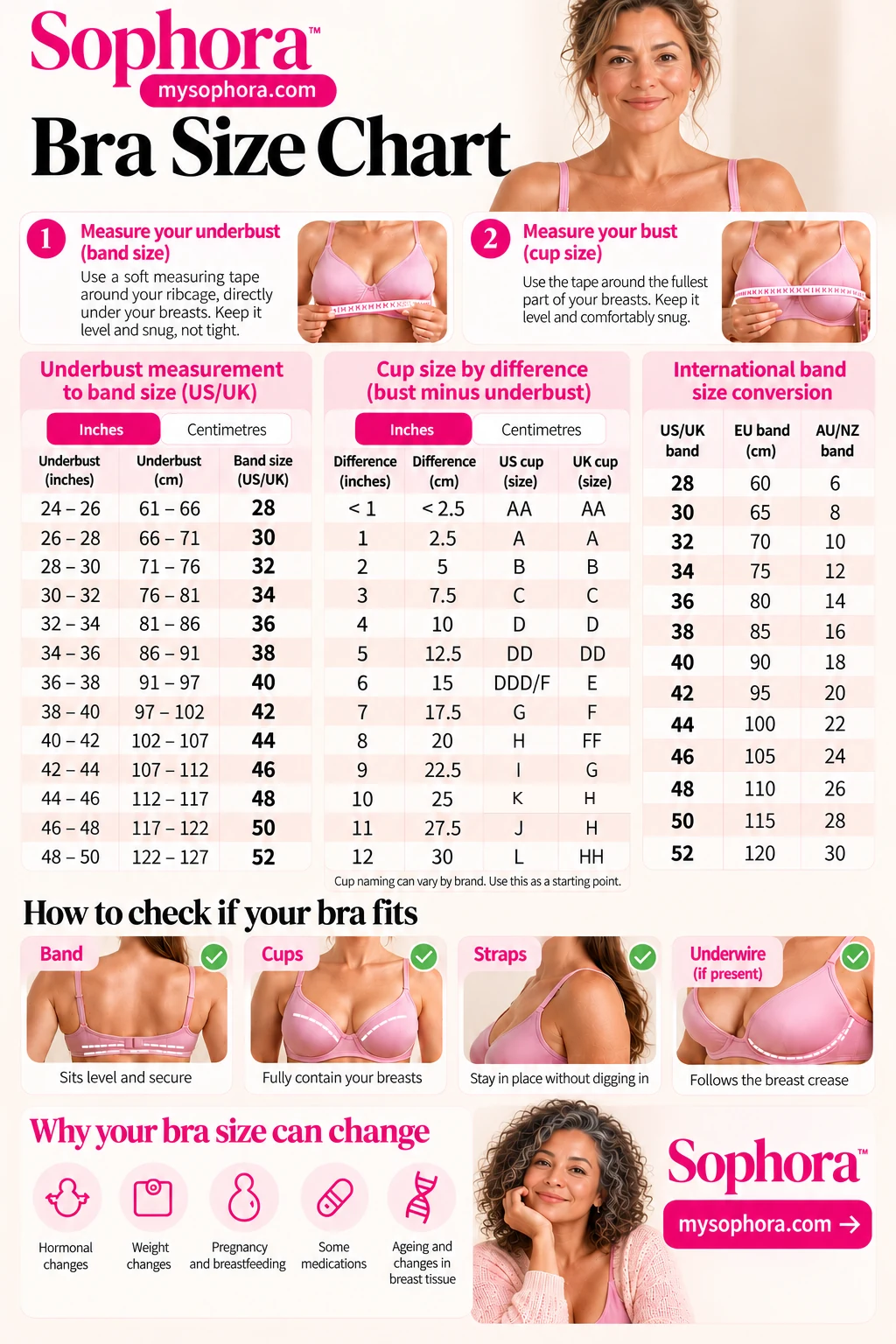
This bra size chart helps you estimate your band and cup size, compare common US, UK, EU and Australian/New Zealand band labels, and check bra fit.
Measure your underbust and the fullest part of your bust first; then use the charts as a starting point, because sizing can vary by brand.
If you are 40+ and are experiencing personal changes that you’d like to understand better, Sophora Companion gives you a private place to explore peri/menopause transition into the next phase of your life.
1. How to measure your bra size at home
You need a soft measuring tape and, ideally, a lightly lined or unpadded bra. Keep the tape level around your body. It should sit close to your skin without digging in.
1
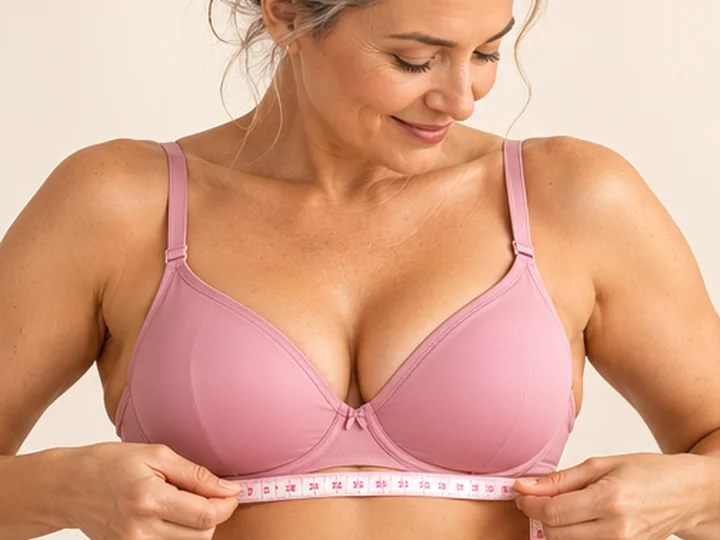
Measure your underbust
Place the tape directly beneath your breasts, around your ribcage. Breathe normally and record the measurement in inches or centimetres. This helps estimate your band size.
2
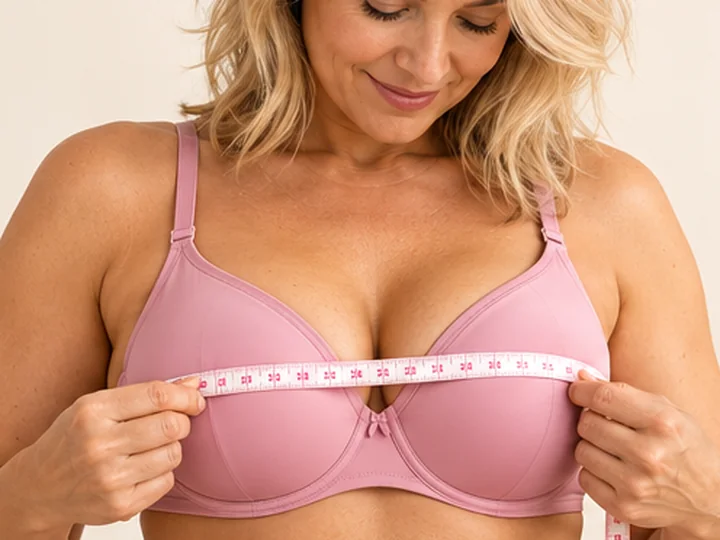
Measure your bust
Measure around the fullest part of your breasts, keeping the tape level across your back. Do not pull it tight or compress breast tissue.
Subtract your underbust measurement from your bust measurement. The difference gives a starting estimate for cup size, but sizing rules differ between brands and countries. Use the tables below as a guide, then check the fit.
2. Underbust measurement and band size chart
This is a simplified starting guide for US/UK numbered band sizes. Measurements overlap because brands use different fitting and rounding methods.
| US/UK band label | Approximate underbust (inches) | Approximate underbust (cm) |
|---|---|---|
| 28 | 23–24 | 58–61 |
| 30 | 25–26 | 63–66 |
| 32 | 27–28 | 68–71 |
| 34 | 29–30 | 73–76 |
| 36 | 31–32 | 78–81 |
| 38 | 33–34 | 83–86 |
| 40 | 35–36 | 88–91 |
| 42 | 37–38 | 93–97 |
| 44 | 39–40 | 99–102 |
| 46 | 41–42 | 104–107 |
| 48 | 43–44 | 109–112 |
| 50 | 45–46 | 114–117 |
| 52 | 47–48 | 119–122 |
Important: These ranges are approximate, not a universal conversion formula. Some fitting methods add inches or round differently. If you are between sizes, use the manufacturer’s chart and try the neighbouring band sizes where possible.
3. Cup size chart: bust minus underbust
Cup size is estimated from the difference between your bust and underbust measurements. The guide below is a simplified US reference; it is not a substitute for a brand-specific chart.
| Approximate difference | US cup starting point | What to know |
|---|---|---|
| About 1 inch / 2.5 cm | A | Starting estimate only |
| About 2 inches / 5 cm | B | Starting estimate only |
| About 3 inches / 7.5 cm | C | Starting estimate only |
| About 4 inches / 10 cm | D | Starting estimate only |
| About 5 inches / 12.5 cm | DD / E, depending on brand | Letter systems begin to diverge |
| About 6 inches / 15 cm | DDD / F, depending on brand | Check the brand’s own chart |
| More than 6 inches / 15 cm | G and above may apply | Use the specific brand’s sizing system |
A cup letter does not describe a fixed breast volume. For example, 34C and 38C do not have the same cup volume. Cup fit depends on both the letter and the band.
4. International bra size conversion chart
Band labels are not the same across countries. These are common approximate equivalents; cup letters and full size conversions can vary between manufacturers.
| US/UK band | EU band label | Australia / New Zealand band |
|---|---|---|
| 28 | 60 | 6 |
| 30 | 65 | 8 |
| 32 | 70 | 10 |
| 34 | 75 | 12 |
| 36 | 80 | 14 |
| 38 | 85 | 16 |
| 40 | 90 | 18 |
| 42 | 95 | 20 |
| 44 | 100 | 22 |
| 46 | 105 | 24 |
| 48 | 110 | 26 |
| 50 | 115 | 28 |
| 52 | 120 | 30 |
Example: A band labelled 34 in common US/UK sizing is generally labelled 75 in EU sizing and 12 in Australian/New Zealand sizing. Do not convert the cup letter alone; use the full size chart from the brand selling the bra.
5. Quick bra size chart
Use this grid to read common US/UK-style size labels. It lists size combinations, not a guarantee that two brands will fit identically. US and UK cup naming can differ, especially above DD.
| Band | A | B | C | D | DD | E / F* | G | H |
|---|---|---|---|---|---|---|---|---|
| 28 | 28A | 28B | 28C | 28D | 28DD | 28E/F* | 28G | 28H |
| 30 | 30A | 30B | 30C | 30D | 30DD | 30E/F* | 30G | 30H |
| 32 | 32A | 32B | 32C | 32D | 32DD | 32E/F* | 32G | 32H |
| 34 | 34A | 34B | 34C | 34D | 34DD | 34E/F* | 34G | 34H |
| 36 | 36A | 36B | 36C | 36D | 36DD | 36E/F* | 36G | 36H |
| 38 | 38A | 38B | 38C | 38D | 38DD | 38E/F* | 38G | 38H |
| 40 | 40A | 40B | 40C | 40D | 40DD | 40E/F* | 40G | 40H |
| 42 | 42A | 42B | 42C | 42D | 42DD | 42E/F* | 42G | 42H |
| 44 | 44A | 44B | 44C | 44D | 44DD | 44E/F* | 44G | 44H |
*Cup labels after DD are not interchangeable across US and UK systems. This grid is a quick label reference only, not a cup-volume conversion table. Always check the brand’s own chart.
6. How should a bra fit?
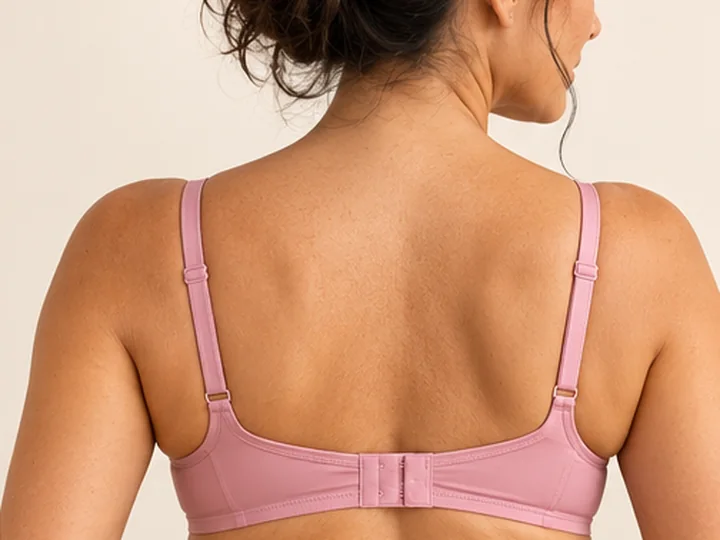
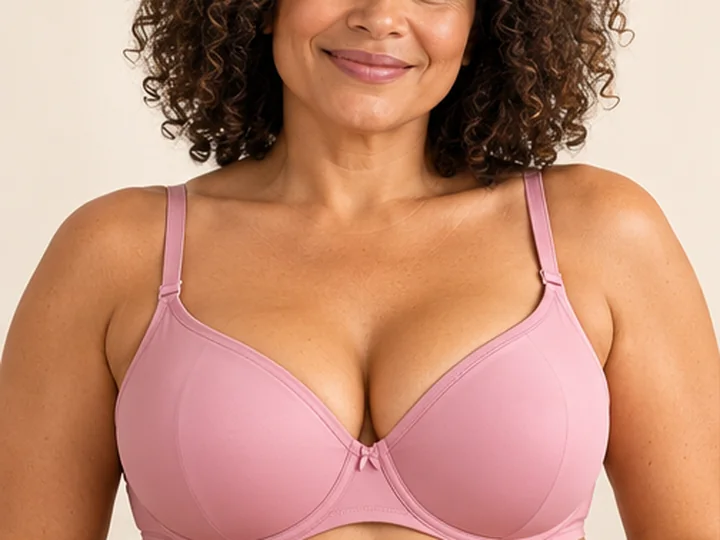
Band
The band should sit level around your body and feel secure without painful pressure. It should not ride up your back.
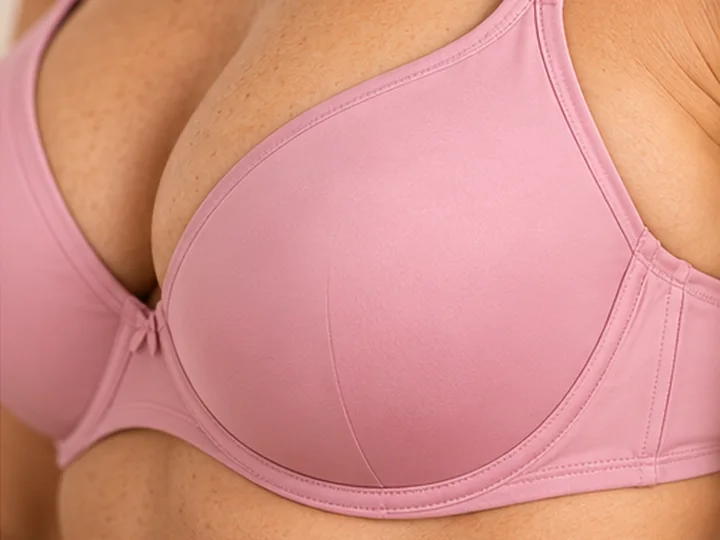
Cups
Breast tissue should sit comfortably inside the cups without persistent spilling, cutting-in or obvious empty space.
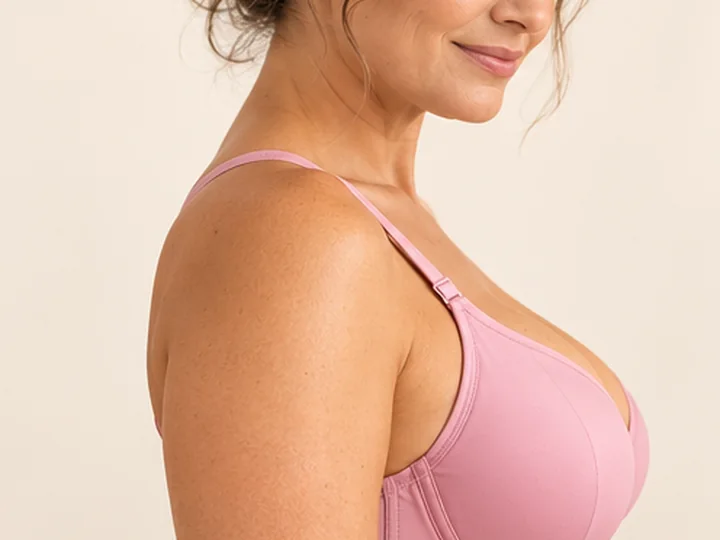
Straps
Straps should stay in place without digging in. They support the fit but should not carry all the weight.
Underwire, if present
The wire should follow the breast crease without resting on breast tissue or pinching your skin.
7. Why your bra size may change
Breast size and comfort can change with weight fluctuations, pregnancy and breastfeeding, hormonal changes, some medicines and the transition through perimenopause and menopause. If your old bras no longer fit, measure again rather than assuming your size must stay the same.
A new or persistent breast change, especially a lump, skin dimpling, nipple change or unusual discharge, should be assessed by a qualified healthcare professional. A bra size chart cannot assess breast health.
Bra Size Chart: Frequently Asked Questions
How do I use a bra size chart to find my size?
Measure around your ribcage directly beneath your breasts, then around the fullest part of your bust. Use the measurements with the sizing chart from the brand you intend to buy from, and check the fit on your body.
What do the number and letter in a bra size mean?
The number identifies the band size, which relates to the ribcage measurement. The letter identifies cup size, estimated from the difference between bust and underbust measurements. Both are needed to describe the size.
Is a C cup the same size in every band?
No. Cup volume changes with band size, so a 32C and a 38C do not contain the same cup volume. Fit also varies by bra shape and manufacturer.
Are US and UK bra sizes the same?
Not always. Band labels are often similar, but cup lettering can differ, particularly above DD. Check whether the chart uses US, UK, EU or another sizing system before converting.
Can perimenopause or menopause change bra size?
Breast size, shape and tenderness can change during midlife, but experiences vary. If your bras begin fitting differently, remeasure. Ask a healthcare professional about a new or persistent breast change.
Beyond the size label
Make sense of what is happening to your body.
Sophora publishes practical, evidence-informed information about perimenopause, menopause and the changes women may notice. A chart can answer one question. Sophora helps you explore the wider context of what you are experiencing.
Sophora Companion provides personalised guidance based on the information you choose to share. It does not replace medical assessment or diagnosis.